How Long Does Mulch Last? (And How Often You Really Need to Replace It)
If you’ve ever wondered how long does mulch last in your garden beds, you’re not alone. Most Clay, Liverpool, and North Syracuse homeowners find themselves guessing when to refresh or replace mulch—and getting it wrong can mean wasted money or struggling plants. Here’s what you actually need to know about mulch lifespan in Central New York.
Key Takeaways
- Most organic mulches in Central New York last about 1–3 years functionally, but look their best with a light refresh every 12–18 months due to fading and compaction.
- Inorganic mulches like stone or rubber mulch can last 8–10+ years but don’t add nutrients or improve soil health like wood chips or bark mulch.
- Climate conditions in the North Syracuse area—heavy snow, freeze-thaw cycles, and spring rains—significantly shorten organic mulch lifespan compared to milder regions.
- Bed location matters: full sun exposure fades mulch color faster, and slopes near downspouts wash away material more quickly.
- CGM Property Services offers mulch delivery, installation, and ongoing maintenance throughout Clay, Liverpool, and greater North Syracuse, NY, keeping your beds looking fresh without the guesswork.
How Long Does Mulch Last? (Quick Answer)
For busy homeowners who need a straight answer: organic mulch generally lasts 1–3 years in Central New York residential beds before needing significant attention.
- Functional lifespan: Shredded hardwood, bark, cedar, and similar organic mulch types typically suppress weeds and retain moisture effectively for 1–3 years, depending on depth and weather conditions.
- Aesthetic lifespan: The fresh, dark mulch color usually fades within one growing season. That’s why many Clay and Liverpool homeowners add mulch yearly even when the old layer hasn’t fully broken down.
- Inorganic options: Decorative stone or rubber mulch can last 8–10+ years, requiring only occasional raking and debris removal.
- Common schedule: Light top-up every 12–18 months, full removal and reset every 3–5 years for organic mulch.
CGM Property Services can assess your existing mulch beds on-site and recommend whether you need a simple refresh or full mulch replacement.
Types of Mulch and Their Typical Lifespans
Not all mulch breaks down at the same rate. Here’s what to expect from popular mulch options in the North Syracuse region:
Organic Mulches
| Mulch Type | Typical Lifespan | Notes |
|---|---|---|
| Double-shredded hardwood | 1–2 years | Most popular locally; decomposes faster in wet conditions |
| Triple-shredded hardwood | 1–2 years | Finer mulch particles decompose faster but look more finished |
| Bark chips/nuggets | 2–4 years | Slower breakdown; great for low-maintenance shrub beds |
| Cedar mulch | 2–3 years | Natural oils resist decay; higher upfront cost |
| Pine bark nuggets | 2–3 years | Can float away on steep slopes during heavy rain |
| Grass clippings/dead leaves | Weeks to months | Best as short-term cover or compost feedstock |
| Dyed mulch (black, brown, red) holds its vibrant color for about one season before fading, though it structurally lasts 1–3 years like undyed shredded bark. |
Inorganic Mulches
- Decorative stone/river rock: 10+ years; extremely durable but doesn’t add organic matter to soil
- Rubber mulch: 8–10+ years; long-lasting but retains heat and won’t improve soil health
CGM Property Services helps Clay homeowners with mulch and landscape maintenance and Liverpool homeowners choose the right mulch type based on maintenance preferences and long-term budget.
What Affects How Long Mulch Lasts?
Several factors determine how long mulch lasts in your specific yard:
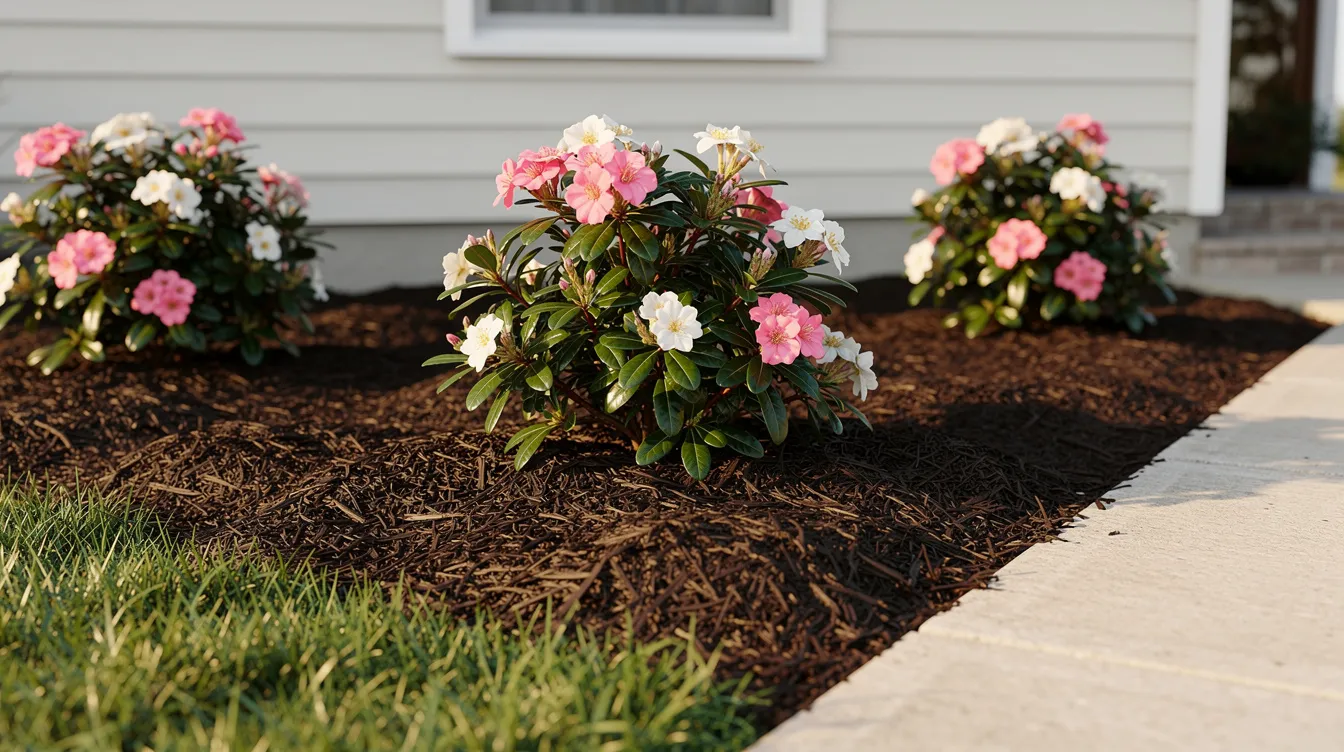
- Moisture and rainfall: Repeated spring rains and summer storms in North Syracuse accelerate decomposition. Shredded mulch can break down significantly within 12–18 months under local moisture loads.
- Freeze-thaw cycles: Central New York experiences 40–50 annual freeze-thaw events that heave, fragment, and compact mulch layers faster than milder climates.
- Sun exposure: Full-sun beds fade dyed mulch 20–30% faster than shaded areas. A sunny front bed in Clay may need refreshing sooner than a shaded Liverpool backyard.
- Particle size: Coarser single or double-shred pieces last longer than very finer mulch, which offers more surface area for fungi and bacteria to break down.
- Traffic and wear: Foot traffic, pets, and leaf buildup grind mulch into soil faster, especially around walkways and gathering spots in Liverpool landscapes and lawns.
- Installation depth: Proper depth of 2–3 inches helps mulch last. Too thin (under 2 inches) leads to bare soil and weed growth; too much mulch (over 4 inches) causes rot and pest problems.
How to Tell When Mulch Needs to Be Replaced or Refreshed
Inspect your mulch beds regularly using this checklist:
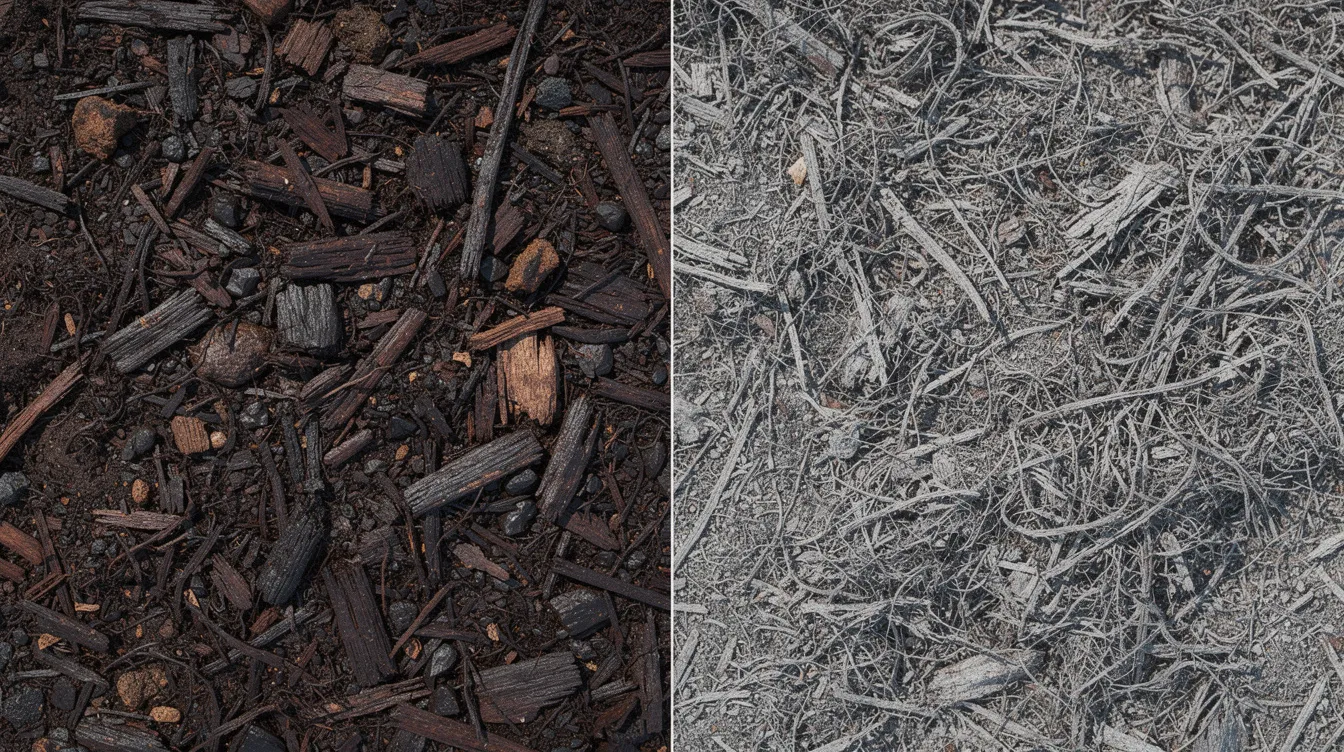
- Faded color: Old mulch turns gray or washed-out tan, signaling lignin depletion and reduced curb appeal.
- Visible bare soil: Patches where dirt shows through mean mulch layers are under 2 inches and no longer effectively suppress weeds.
- Heavy matting or crusting: Compacted mulch forms a hard surface that blocks water and air circulation, common after a couple of winters.
- Increased weed growth: Weeds pushing through or sprouting along edges indicate the layer is too thin or has decomposed into soil-like material.
- Signs of rot or mold: Slimy, foul-smelling mulch in low spots or shaded areas should be removed and replaced.
- Weed seeds sprouting: If you’re seeing more weeds than usual, your weed barrier has likely failed.
Seasonal inspection routine: Evaluate mulch each April/May after snowmelt and again in early fall before winter. CGM Property Services can perform professional mulch assessments and recommend whether a rake-and-top-up or full removal makes more sense.
Typical Replacement Schedules for Different Mulches
Here’s a practical guide for scheduling mulch maintenance:
General rule: Most homeowners in Clay, Liverpool, and North Syracuse refresh organic mulch every 12–18 months and fully replace every 3–5 years.
| Mulch Type | Top-Up Frequency | Full Replacement |
|---|---|---|
| Double-shredded hardwood | Yearly | Every 3 years |
| Triple-shredded/dyed mulch | Yearly | Every 2–3 years |
| Bark nuggets/chips | Every 2 years | Every 4–5 years |
| Cedar mulch | Every 2 years | Every 4–5 years |
| Stone/rubber | Rarely | One-time installation |
Special considerations: Homeowners who also need broader Syracuse landscaping and lawn services can coordinate mulch care with regular maintenance.
- Steep slopes and areas near downspouts wash away 30–50% faster
- Front beds along busy streets may need annual attention due to road salt and visibility
- CGM Property Services can set up a recurring maintenance plan so you don’t have to track schedules yourself
Making Your Mulch Last Longer (Without Hurting Plant Health)
Extend your mulch lifespan with these practical tips:
- Maintain 2–3 inch depth: This is the sweet spot for weed suppression without harming plant roots. Keep 3–6 inches of clearance around tree trunks and plant stems to prevent rot.
- Rake seasonally: Fluffing mulch once or twice per growing season breaks up compaction, improves air circulation, and restores a fresh look.
- Spot-top thin areas: Add 1–2 inches of fresh mulch to washed-out zones rather than reapplying mulch across entire beds.
- Install edging: Metal, plastic, or natural borders retain 80% more mulch on slopes and prevent spreading mulch from migrating onto lawns and driveways, especially when paired with ongoing Syracuse lawn care and landscaping services.
- Redirect downspouts: Splash blocks prevent mulch from washing away during heavy North Syracuse thunderstorms, and pairing this with regular North Syracuse lawn mowing and landscape maintenance keeps beds and turf looking their best.
- Avoid over-mulching: Total depth exceeding 4 inches can harbor rodents, suffocate roots, and create “volcano mulching” around trees that can harm plants.
CGM Property Services includes edging, bed prep, and careful depth control as part of their mulch installation and maintenance services.
Mulch in Clay, Liverpool, and North Syracuse, NY: Local Climate Considerations
Central New York’s weather patterns directly impact how long mulch lasts in your outdoor spaces:
- Lake-effect snow: Heavy snow compresses mulch, and 50–100 inches of annual snowfall accelerates breakdown over successive winters.
- Spring thaw: Wet April and May weather patterns (3–4 inches monthly rainfall) speed decomposition and washing, especially on sloped beds.
- Summer humidity: Hot, humid July and August spells promote fungal growth in poorly drained beds, shortening organic mulch effectiveness.
- Road salt spray: Salt near driveways and streets discolors mulch gray, prompting many homeowners to refresh front beds yearly for curb appeal and to complement driveway and entrance landscaping ideas.
Best install mulch timing: Late April through early June, and again September–October for winter protection. CGM Property Services schedules mulch delivery and maintenance around these weather patterns to maximize mulch lifespan and plant protection year round.
CGM Property Services: Mulch Delivery, Installation, and Maintenance
For Clay, Liverpool, and North Syracuse homeowners tired of hauling bags from the garden center, CGM Property Services offers a better solution that can be paired with their broader North Syracuse lawn mowing and landscape maintenance:
- Bulk mulch delivery: Eliminates multiple trips and reduces waste compared to bagged options. Order by the cubic yard for accurate coverage, or combine delivery with comprehensive property management and landscape care services.
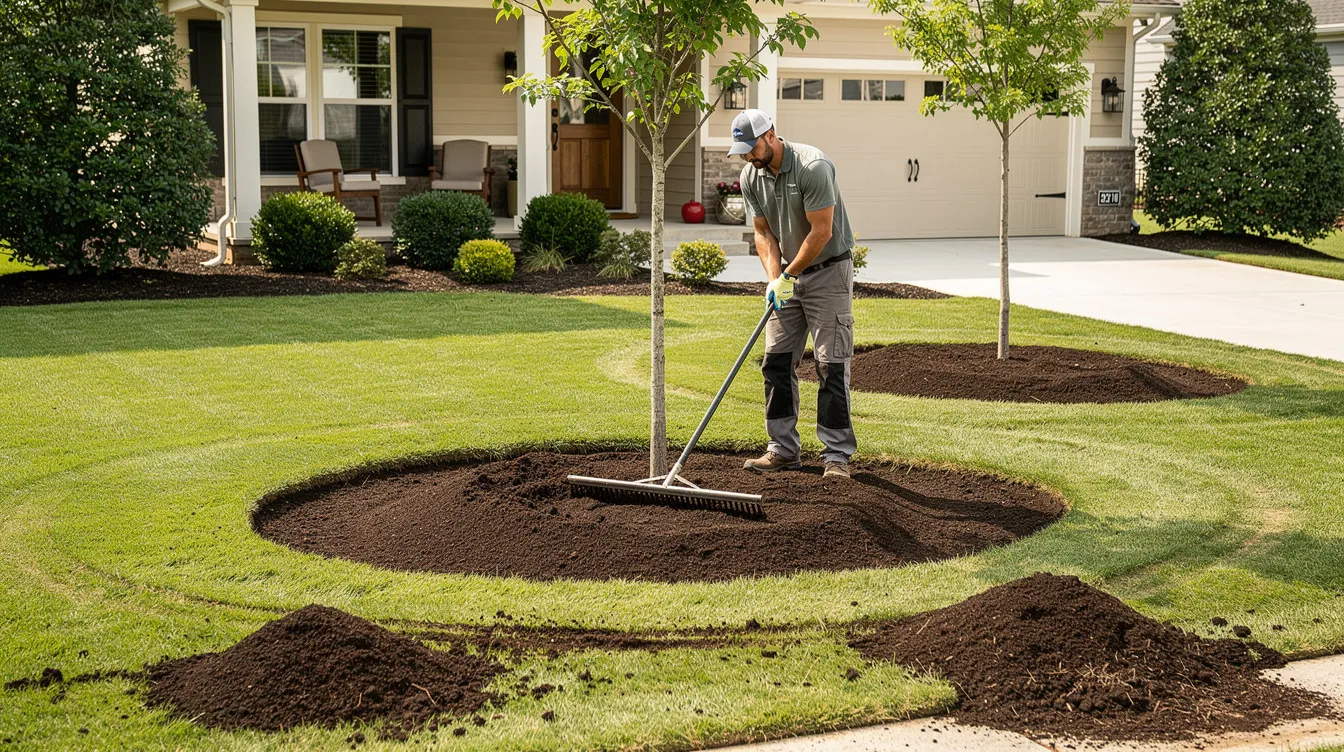
- Professional installation: Includes bed cleanout, edging, weed barrier options, accurate depth measurement, and careful spreading mulch around existing plants, and can be integrated with ongoing Cicero lawn mowing and landscaping maintenance.
- Quality mulch options: Double-shredded hardwood, dyed brown or black mulch, and decorative bark suited to Central New York landscapes and to complement Baldwinsville lawn and landscape maintenance.
- Recurring maintenance plans: Annual or semiannual inspections, top-ups, and bed touch-ups to keep mulch performing and looking fresh, and they can be bundled with Mattydale lawn mowing and landscaping maintenance, Village Green property and lawn care, or Youngs area lawn and landscape services.
Contact CGM Property Services for a site visit and quote to determine how long your current mulch is likely to last and what schedule fits your property. Schedule before peak spring rush for best availability.
Frequently Asked Questions About How Long Does Mulch Last? (And How Often You Really Need to Replace It)
Here are answers to common questions about mulch lifespan and maintenance that homeowners frequently ask:
How often should I replace mulch around trees and shrubs?
- A light top-up every 1–2 years typically maintains proper 2–3 inch mulch layers around established trees and shrubs.
- Complete removal and reset every 3–5 years prevents plant roots from being buried under accumulated material.
- Always keep mulch pulled back 3–6 inches from trunks and stems to prevent disease and rot.
Can I put new mulch over old mulch?
- You can usually add a fresh layer of 1–2 inches over existing mulch as long as the old layer isn’t moldy, slimy, or heavily compacted.
- Keep total depth at 2–3 inches and never exceed 4 inches to prevent root suffocation and pest issues.
- Rake and thin the old mulch before adding new material so layers blend and drain properly.
Is dyed mulch safe for my plants and pets?
- Most modern dyed mulches use water-based, non-toxic colorants that are generally safe when sourced from reputable suppliers.
- Avoid very cheap products that may contain construction debris or unknown added nutrients.
- CGM Property Services sources high quality mulch appropriate for residential landscapes, with both natural and dyed options available.
Does mulch attract bugs or rodents?
- Any organic material can host insects, but a properly maintained 2–3 inch layer doesn’t typically create serious pest problems.
- Very thick mulch piled against foundations or tree trunks can shelter rodents and should be avoided.
- Keep mulch several inches away from house siding and schedule regular inspections if pest concerns exist.
How much mulch do I need for my beds?
- Measure bed length × width for square footage, then plan about 0.25 cubic yard per 100 square feet for each 1-inch layer (adjust to reach 2–3 inches total).
- Contact CGM Property Services with your bed measurements for exact calculations and delivery arrangements.
- Ordering a bit extra is better than coming up short, especially when edging or reshaping garden beds during installation.