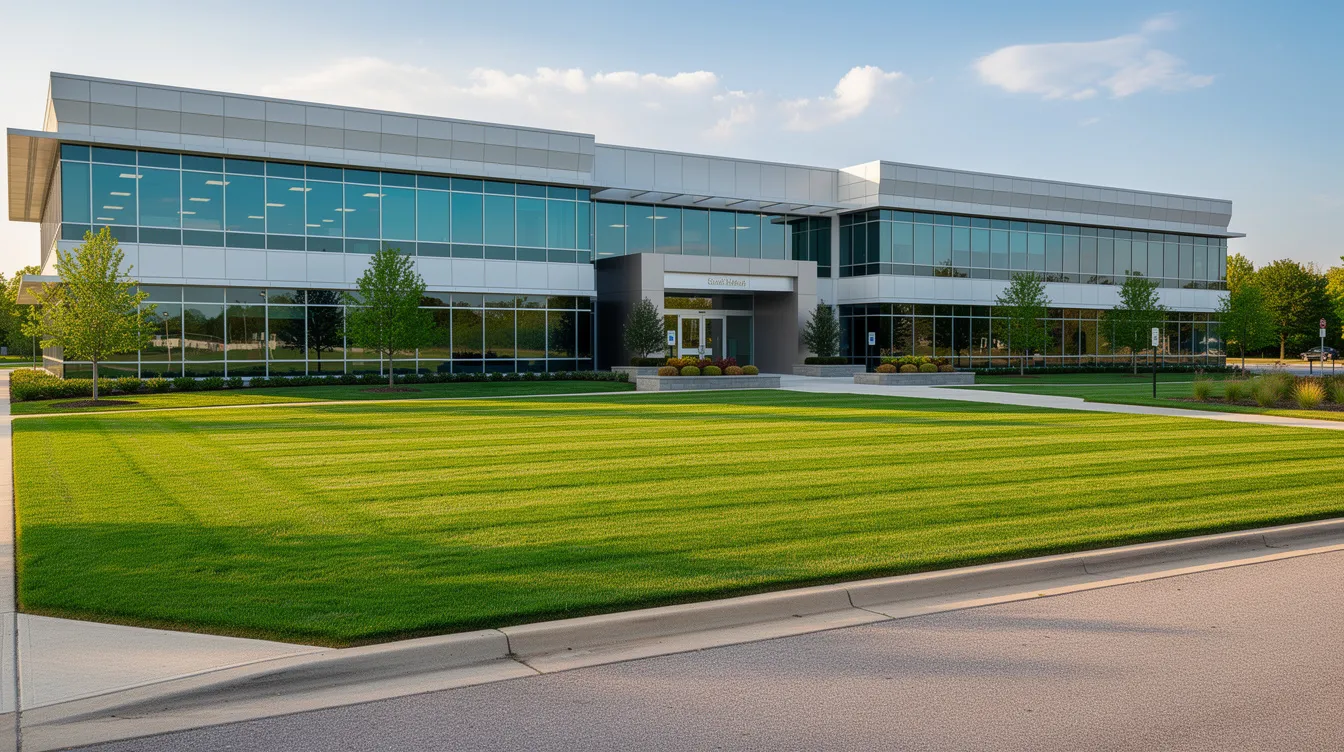
Yard and Lawn Maintenance for Apartment Communities in Central New York
Key Takeaways
- CNY apartment properties require a season-by-season yard care plan covering spring, summer, fall, and winter to maintain safe, attractive, and budget-friendly common areas.
- Cool season grass varieties like Kentucky bluegrass, perennial ryegrass, and tall fescue dominate Central New York landscapes and drive your mowing, fertilizing, and overseeding schedules, all of which are essential for keeping your lawn healthy.
- Routine lawn care services—including mowing, edging, pruning, and cleanups—reduce long-term costs by preventing damage, resident complaints, and emergency repairs.
- Commercial, HOA, and apartment landscapes face unique challenges: high foot traffic, tighter safety rules, and consistent curb appeal requirements for leasing and retention.
- CGM Property Services builds custom, year-round maintenance programs specifically designed for CNY apartment and HOA communities.
Introduction: Why Year-Round Yard Maintenance Matters for Apartment Properties
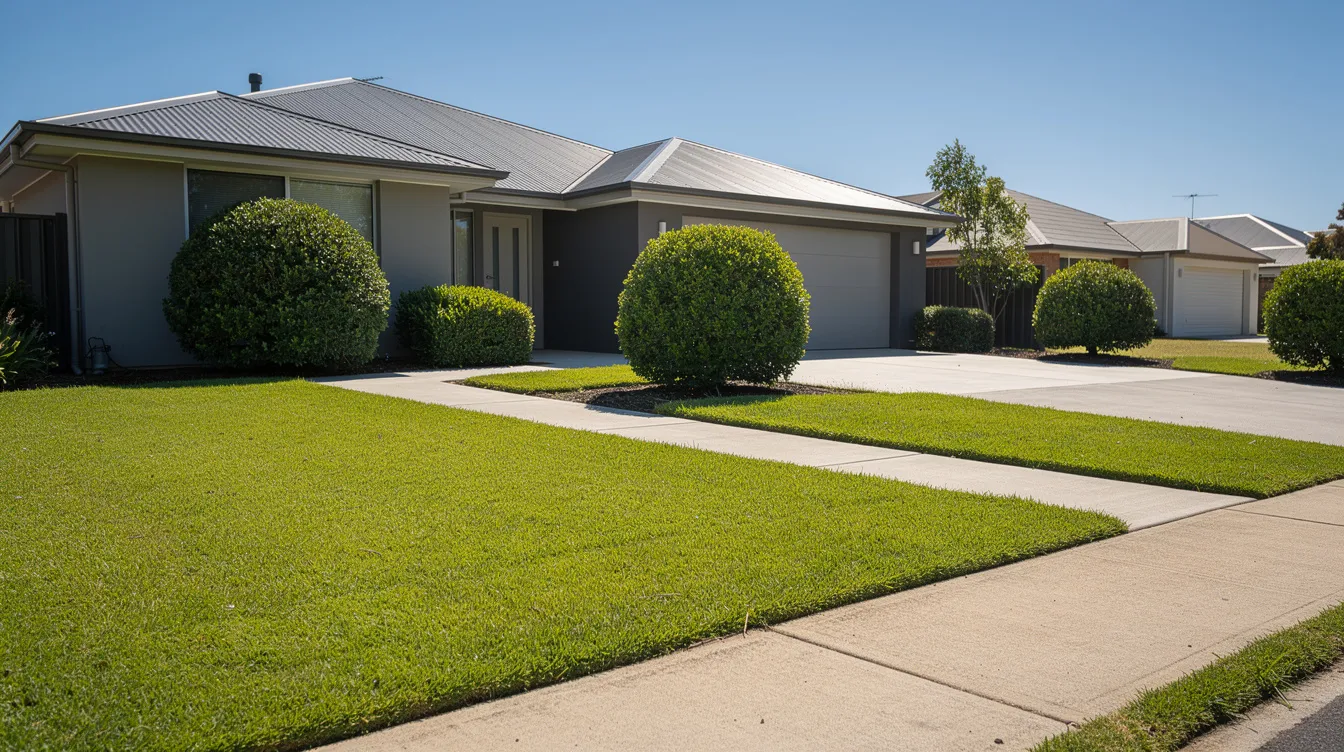
Well-kept lawns, entryways, and courtyards directly influence occupancy rates, resident satisfaction, and property value in CNY apartment communities. When prospective tenants walk through your grounds, they’re evaluating more than square footage—they’re assessing whether this property feels like home. A healthy lawn and tidy landscape signal professional management and create the first impression that can seal or break a lease.
Central New York’s climate presents distinct challenges that demand a four-season landscape strategy, not just occasional mowing. Cold, snowy winters dump over 100 inches of snow annually. Wet springs bring rapid grass growth and debris cleanup needs. Warm, humid summers stress turf and invite pests. Leaf-heavy falls require multiple cleanup rounds before the first frost, typically arriving mid-October. Each season brings specific yard maintenance tasks that, when handled proactively, save money in the long run.
Apartment properties face unique challenges that single-family homeowners rarely encounter. Constant foot traffic from residents, delivery drivers, and pets compacts soil and creates bare spots faster than most homeowners ever experience. Parking lot runoff introduces salt and pollutants to turf edges. Shared spaces must remain safe, accessible, and visually appealing every single day of the week. These realities require professional planning and execution.
CGM Property Services serves as a local CNY partner handling routine mowing, edging, pruning, and seasonal cleanups for apartment complexes, HOAs, and commercial properties. With transparent pricing and a focus on building long-term relationships rather than one-time fixes, CGM understands what Central New York property managers actually need. This article will walk you through specific tasks to schedule in spring, summer, fall, and winter, plus budgeting and vendor tips tailored to multi-building communities.
Know Your Central New York Lawn: Grass Types and Site Conditions
Central New York sits firmly in cool season grass territory. Many homeowners and property managers rely on Kentucky bluegrass, perennial ryegrass, and tall fescue around buildings and common areas. Understanding how these grass types behave through the year shapes every maintenance decision you’ll make.
Cool season grasses follow predictable growth patterns that differ significantly from warm season grasses found in southern states:
- Strong growth periods: April through June and September through October bring the most aggressive grass growth, requiring weekly mowing and peak nutrient demand.
- Summer stress: July and August heat slows growth and can push turf into semi-dormancy, especially in sunny, south-facing areas.
- Late winter risks: Extended snow cover and freeze-thaw cycles (CNY sees 20+ per season) can damage grass roots and create bare spots before spring arrives.
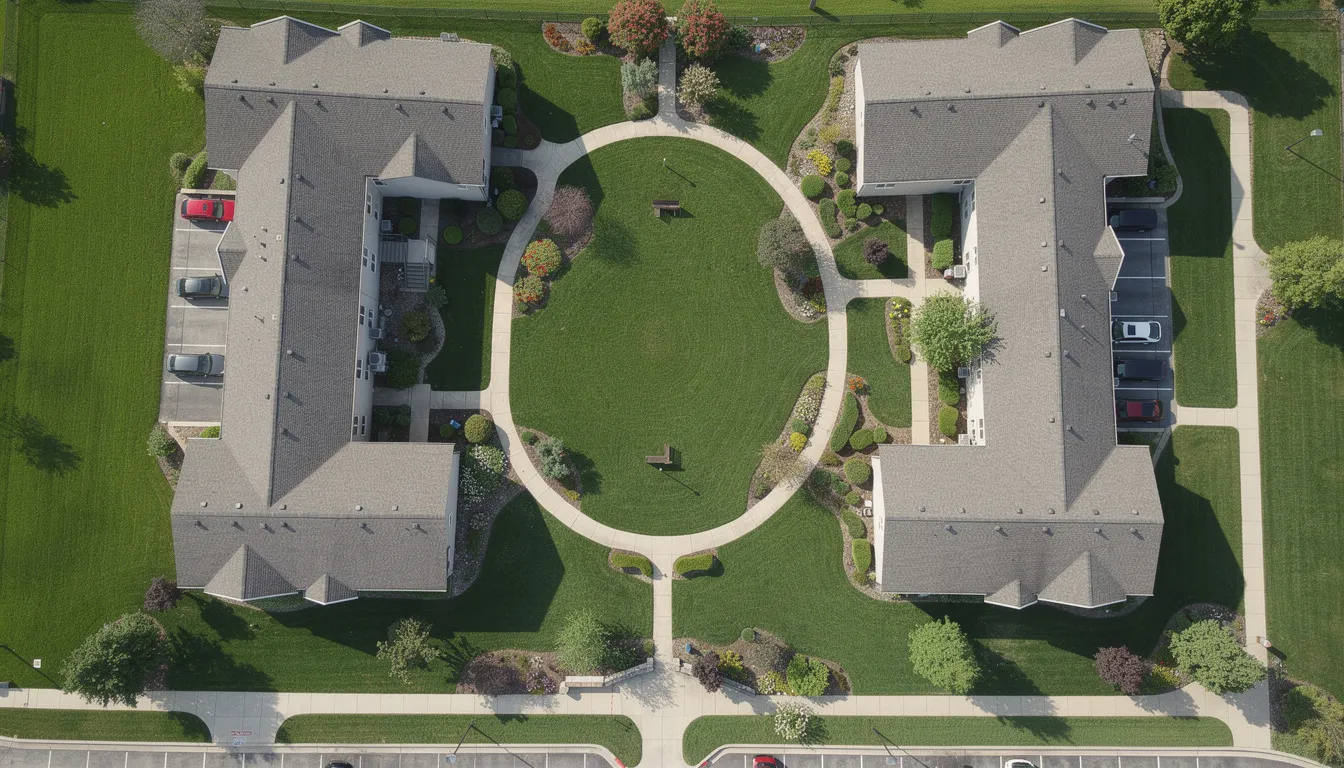
Shaded inner courtyards and north-facing building sides present different challenges. These areas often perform better with shade-tolerant fine fescue blends rather than straight bluegrass, which craves sun. Adjusting seed selection for microclimates prevents chronic thin turf and reduces overseeding costs.
Heavy foot traffic from residents, pets, and deliveries compacts soil faster on apartment properties than in typical residential yards. Areas around mail kiosks, dog-walk paths, playgrounds, and entry sidewalks see compacted soil that restricts grass roots and creates persistent bare spots. These high-traffic zones require specific attention in seasonal maintenance plans, including aeration and reinforced turf varieties.
Apartment lawns also contend with irrigation overspray, snowplow damage along curbs, and salt runoff from parking lots. These factors kill turf in predictable patterns—along sidewalk edges, near building entries, and wherever meltwater pools in spring. Identifying these problem zones early allows for targeted repairs rather than costly full-lawn renovations.
Spring Yard and Lawn Maintenance for CNY Apartment Properties (March–May)
Late March through May represents the reset period after snow and salt exposure. Spring maintenance focuses on cleanup, lawn recovery, and setting the foundation for strong summer growth. Soil temperatures typically reach 50-55°F between mid-March and early May in Central New York, enabling grass root growth to resume.
The following tasks should appear on every property manager’s spring landscape contract. Think of this as a concrete checklist for planning your work with a lawn care professional like CGM Property Services.
Spring Cleanups and Site Inspection
Crews should remove branches, litter, and winter debris from lawns, shrub beds, playground buffers, and drainage areas by early April. Leaving debris too long smothers turf and encourages mold growth—snow mold alone affects 15-20% of untreated northern lawns each year.
Sand and salt accumulations along curbs, sidewalks, and entrances require hauling and proper disposal. Salt burn damages turf and ornamental beds, sometimes killing grass outright if left in concentrated piles. This cleanup protects your investment in spring fertilizing and seed applications.
Inspect for snowplow damage including torn turf along driveways and parking lot edges. Once soil is workable (typically when ground frost fully clears), plan repairs or overseeding for these damaged strips. Document problem areas with photos—downspout washouts, chronically muddy entrances, dog run damage—to inform the season’s maintenance priorities and budget allocation.
Early-Season Mowing and Edging
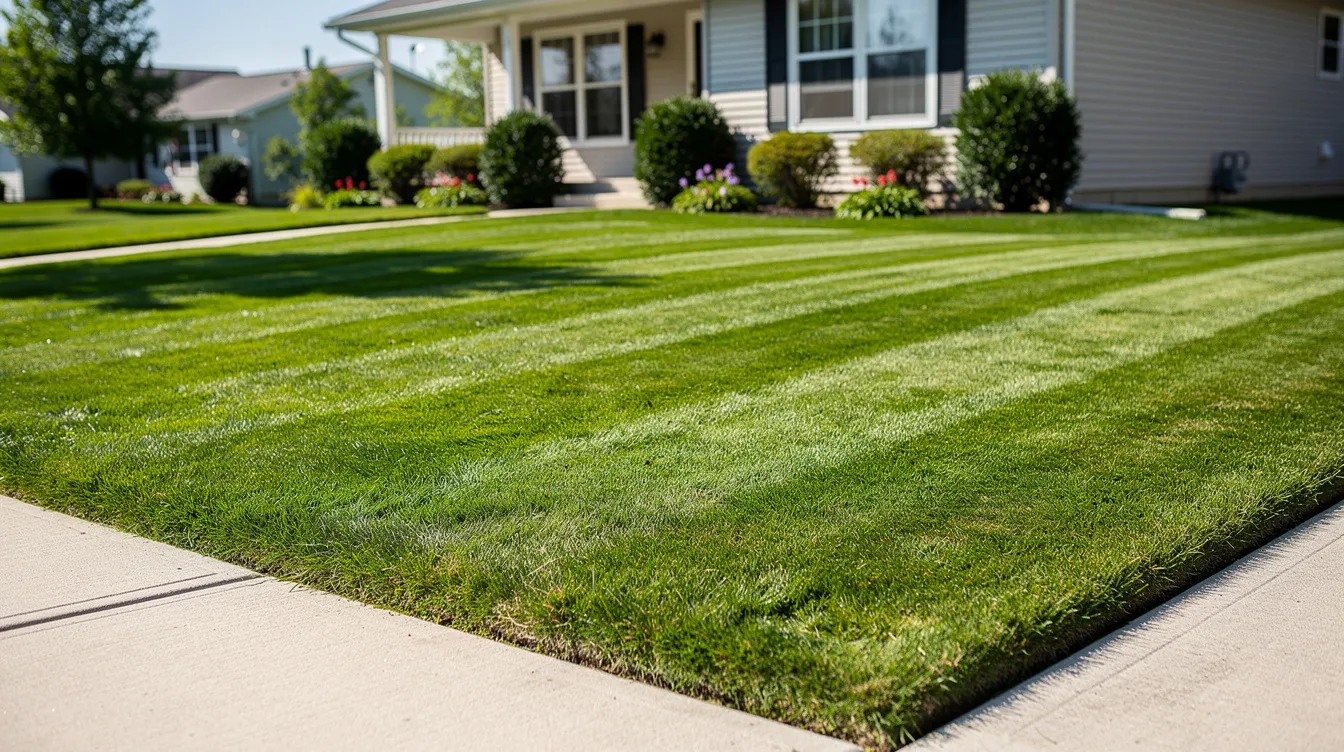
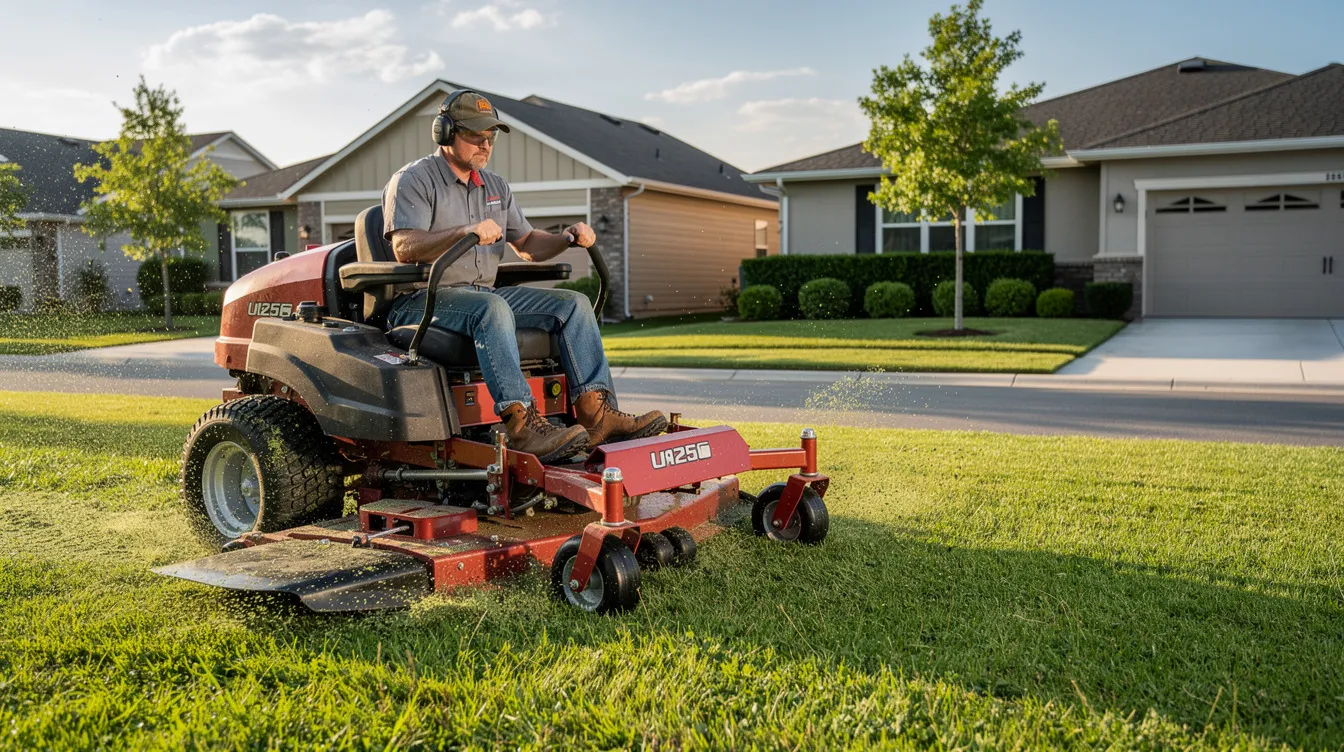
Cool season grasses in CNY typically resume active growth in April. Begin regular mowing once grass reaches about 3-3.5 inches, maintaining height around 2.5-3 inches through spring. This height supports photosynthesis while keeping grass blades manageable.
Sharpen lawn mower blades before the first cut of the season. Dull blades tear rather than cut grass, leaving ragged edges that brown quickly and invite disease. On large lawns covering multiple buildings, this detail matters for visual consistency and turf health.
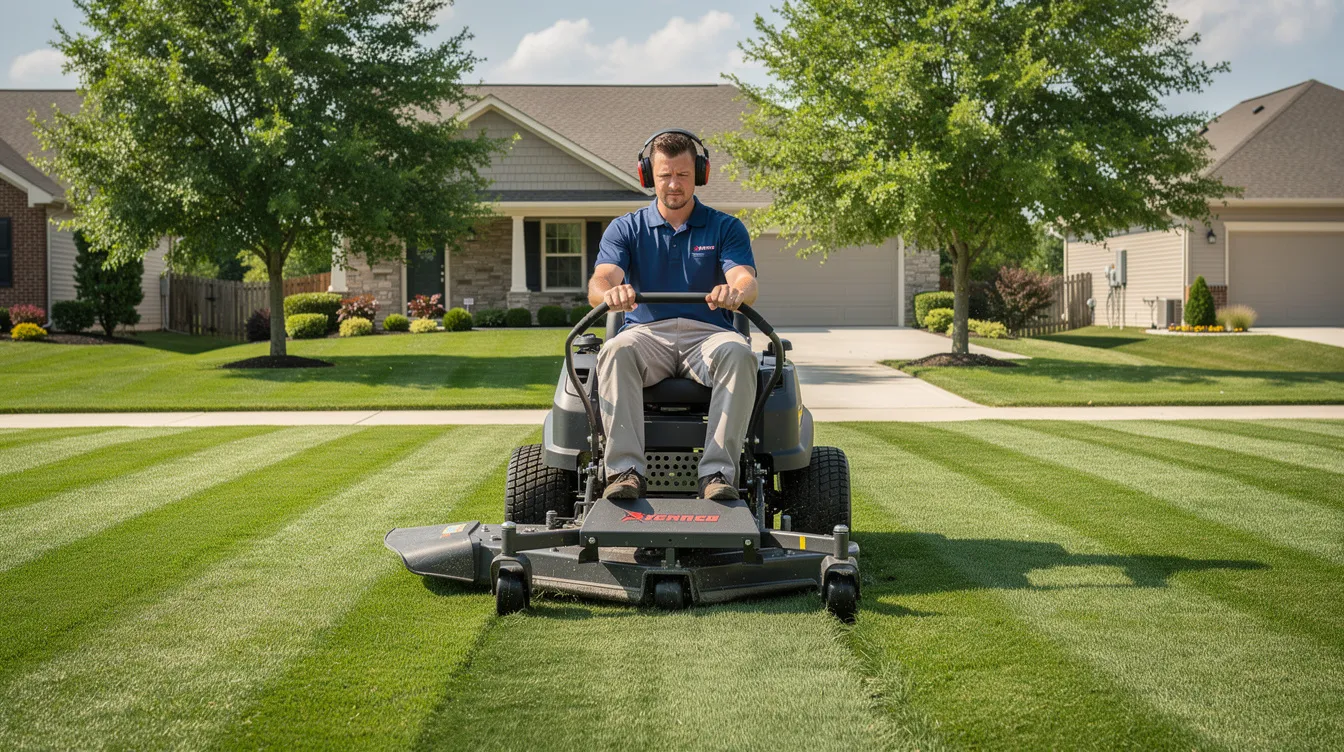
Redefine bed edges along walkways, signage, and parking islands early in the season. Crisp lines set the visual tone for the entire year and make ongoing maintenance easier. Multi-building properties benefit from consistent mowing patterns and schedules—residents should always see some portion of the grounds looking freshly cut, reinforcing that management pays attention to details.
Fertilization, Pre-Emergent, and Weed Prevention
The first fertilizer and pre-emergent crabgrass application in Central New York typically occurs from mid-April to early May, timed before soil consistently reaches about 55°F. This window targets crabgrass seed before germination begins.
Apply slow-release, balanced fertilizer appropriate for cool season grasses uniformly across large open areas and high-visibility zones like leasing office entries. Industry recommendations suggest nitrogen at 0.5-1 pound per 1,000 square feet to promote greening without excessive growth that fuels summer weeds.
Pre-emergent herbicides help prevent crabgrass and other annual weeds along sidewalks, curbs, and sunny slopes that heat up early in the season. These areas are most vulnerable to weed invasion and most visible to residents and prospective tenants.
Coordinate with a licensed applicator for herbicide use. New York State Department of Environmental Conservation regulations require proper notification in common lawn areas. Post signs per local requirements—this protects residents, especially those with pets, and keeps your property compliant.
Aeration, Dethatching, and Overseeding
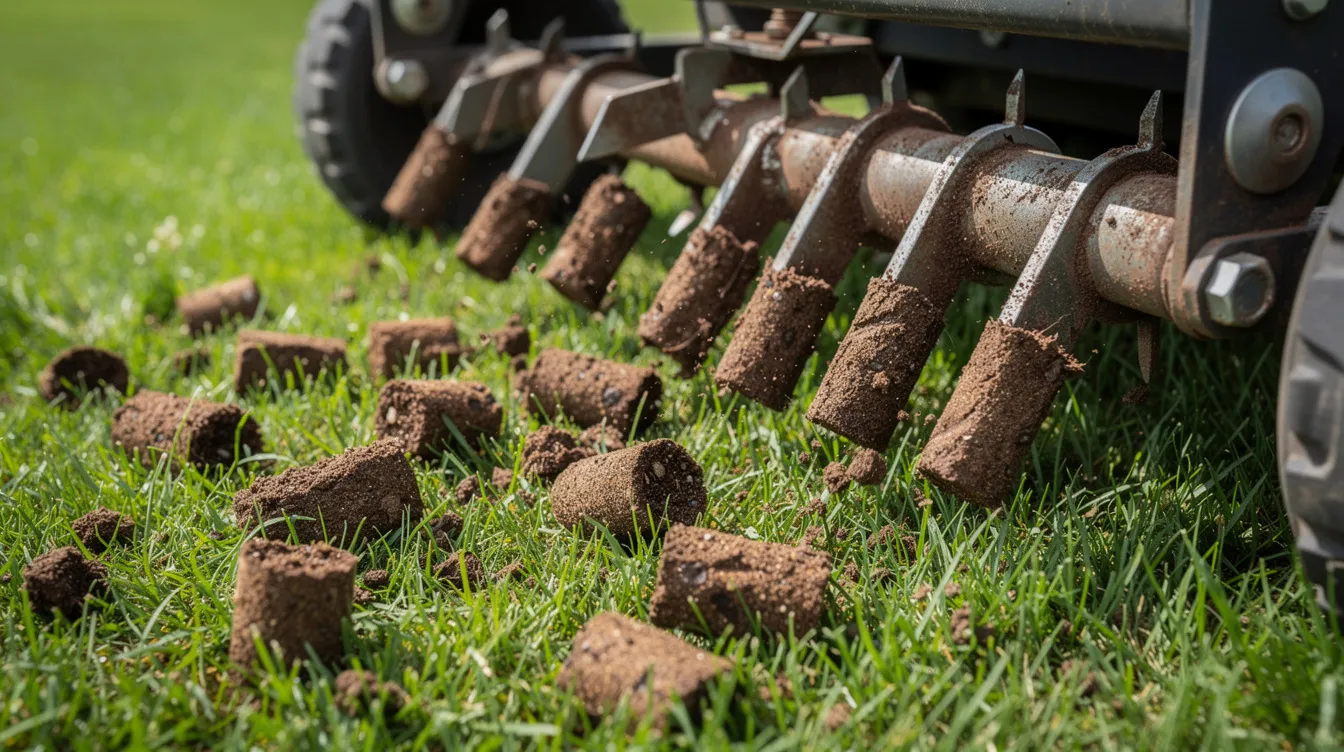
Compacted soil in apartment settings—especially around mail kiosks, pet areas, bus stops, and building entrances—benefits significantly from core aeration. Studies show aeration improves water infiltration by up to 30% in heavily trafficked turf areas.
Dethatching and aeration improve water and nutrient penetration, reducing puddling in courtyards after spring rains. For apartment complexes, this prevents the muddy, slippery conditions that generate maintenance requests and resident complaints.
Overseed bare patches and high-use paths with cool season blends rated for CNY conditions and foot traffic. Grass seed germinates best when soil contact is maximized—which is why overseeding immediately after aeration produces the best results. For heavily damaged turf, schedule more extensive renovation in fall, using spring overseeding mainly as a stabilizing measure to prevent erosion and improve appearance.
Shrub, Tree, and Perennial Bed Maintenance
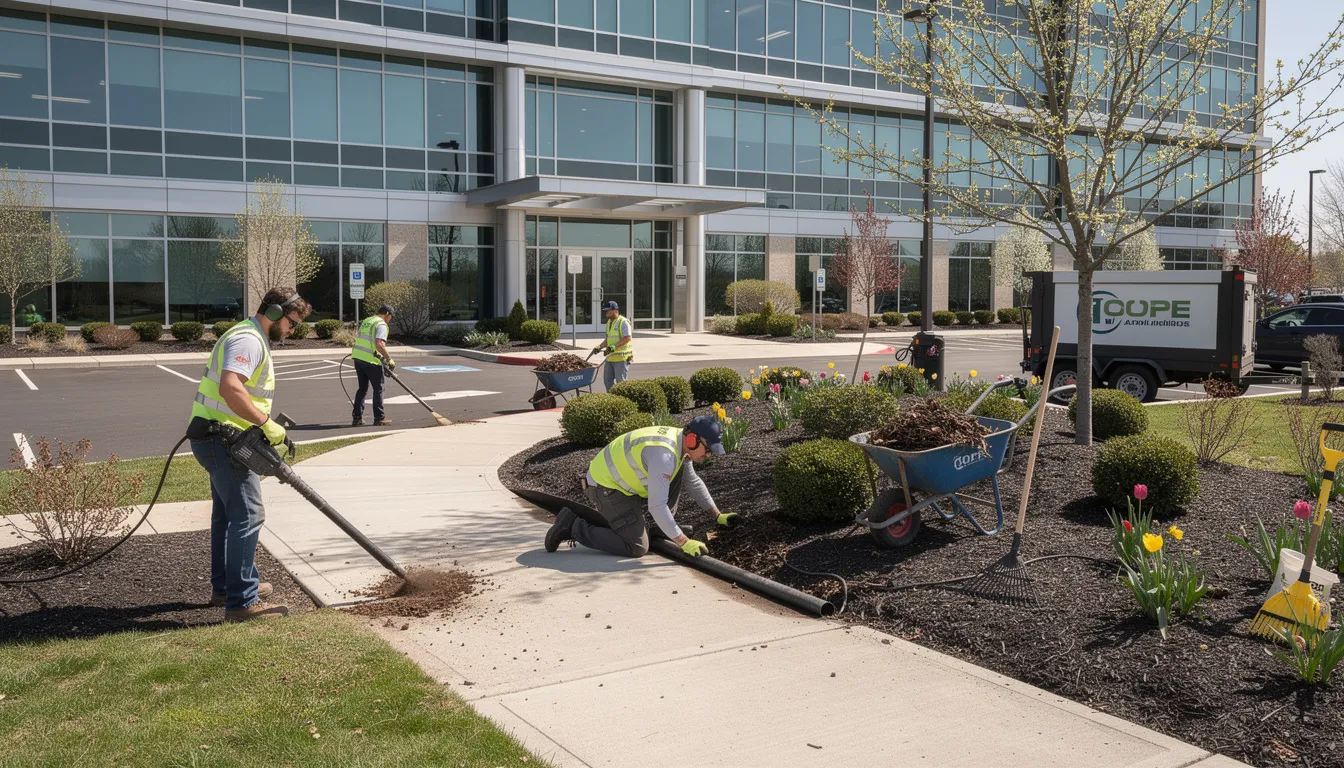
Early spring brings ideal timing for pruning dead or crossing branches on ornamental trees and shrubs along entry drives, parking lots, and building fronts. Remove winter damage before new grass growth makes access difficult.
Cut back ornamental grasses and perennials in front-of-building beds, clubhouse entrances, and pool areas before new growth pushes. Waiting too long risks cutting into fresh shoots and weakening plants.
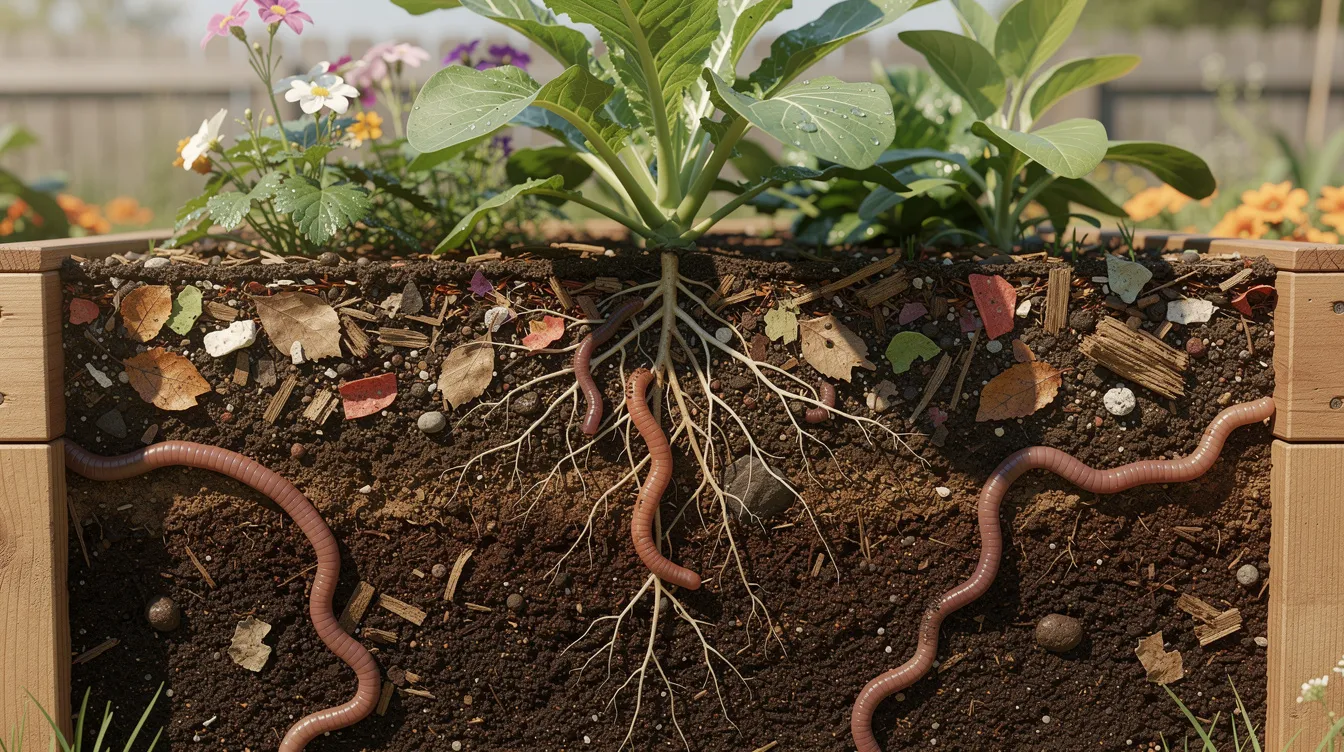
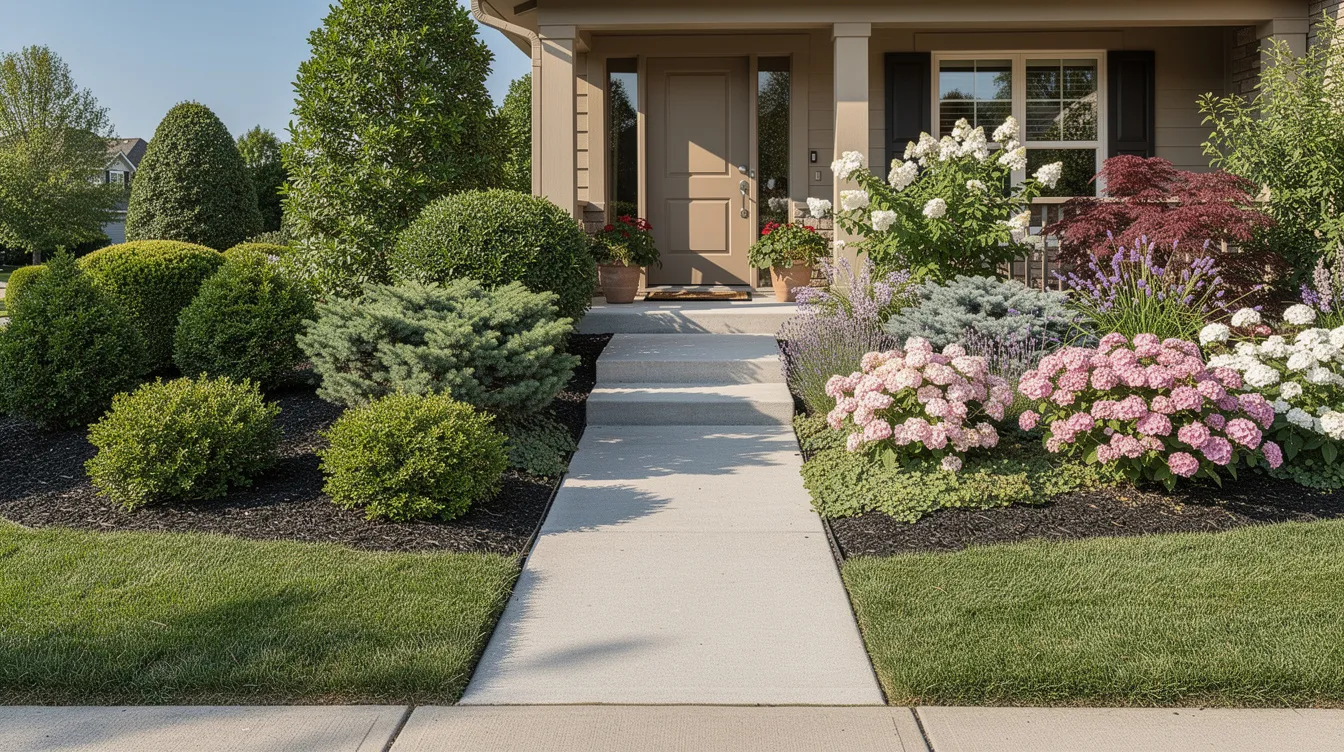
Replenish mulch in planting beds to a depth of 2-3 inches, focusing on main signage, leasing office beds, mail centers, and high-traffic walkways. This investment costs relatively few dollars per cubic yard but delivers outsized returns in weed suppression and visual appeal. Mulch also moderates soil temperature, helping flower beds and shrubs establish strong root systems for summer stress.
Summer Lawn and Yard Maintenance for Apartments (June–August)
June through August in CNY brings heat spells, irregular rainfall averaging 3-4 inches monthly, and high evapotranspiration rates reaching 0.2-0.3 inches per day during July peaks. The emphasis shifts to mowing strategy, water management, and stress reduction.
Apartment residents spend more time outdoors in summer—using playgrounds, grilling areas, and dog walks—which increases wear on turf and heightens the need for tidy, safe grounds. The following scheduling tips help property managers maintaining multiple buildings keep landscapes healthy and attractive.
Optimal Mowing Height and Frequency in CNY Summers
Maintain cool season grasses at a higher summer height—about 3-3.5 inches—to shade soil, conserve moisture, and crowd out weeds naturally. This practice alone dramatically reduces the need for supplemental watering and herbicide applications.
Mow weekly during peak growth in early summer, adjusting frequency when growth slows in late July and August. Never remove more than one-third of blade length at a time. Scalping stresses grass and opens space for opportunistic weeds.
Schedule mowing during cooler parts of the day to reduce turf stress and minimize disturbance for residents using outdoor amenities. Early morning cuts work well before playgrounds and pool areas see heavy use.
String-trim carefully around HVAC units, mailboxes, signage, and playground borders. Careless trimming damages equipment housings, shreds vinyl signage, and creates liability concerns. Attention to detail here separates professional lawn care companies from crews just trying to finish fast.
Watering and Irrigation Management
CNY lawns typically need about 1-1.5 inches of water per week from rain or irrigation combined. Deeper, less frequent watering encourages grass roots to grow downward, building drought resilience. Daily light sprinkling keeps roots shallow and dependent on constant moisture.
Automated irrigation systems on apartment properties should run early morning (around 4-9 a.m.) to reduce evaporation and minimize fungal disease risk. Wet turf sitting overnight in warm conditions invites problems.
Check regularly for broken heads, overspray onto sidewalks or parking lots, and pooling near buildings. Adjust zones to improve coverage and reduce water waste. Smart irrigation controllers can cut water waste by 30-50% on large lawns by adjusting based on real-time weather data.
CGM Property Services can assist managers by walking the site during system operation to spot coverage gaps and recommend schedule or nozzle adjustments. This proactive approach prevents dead patches and reduces water bills.
Weed, Pest, and Disease Monitoring
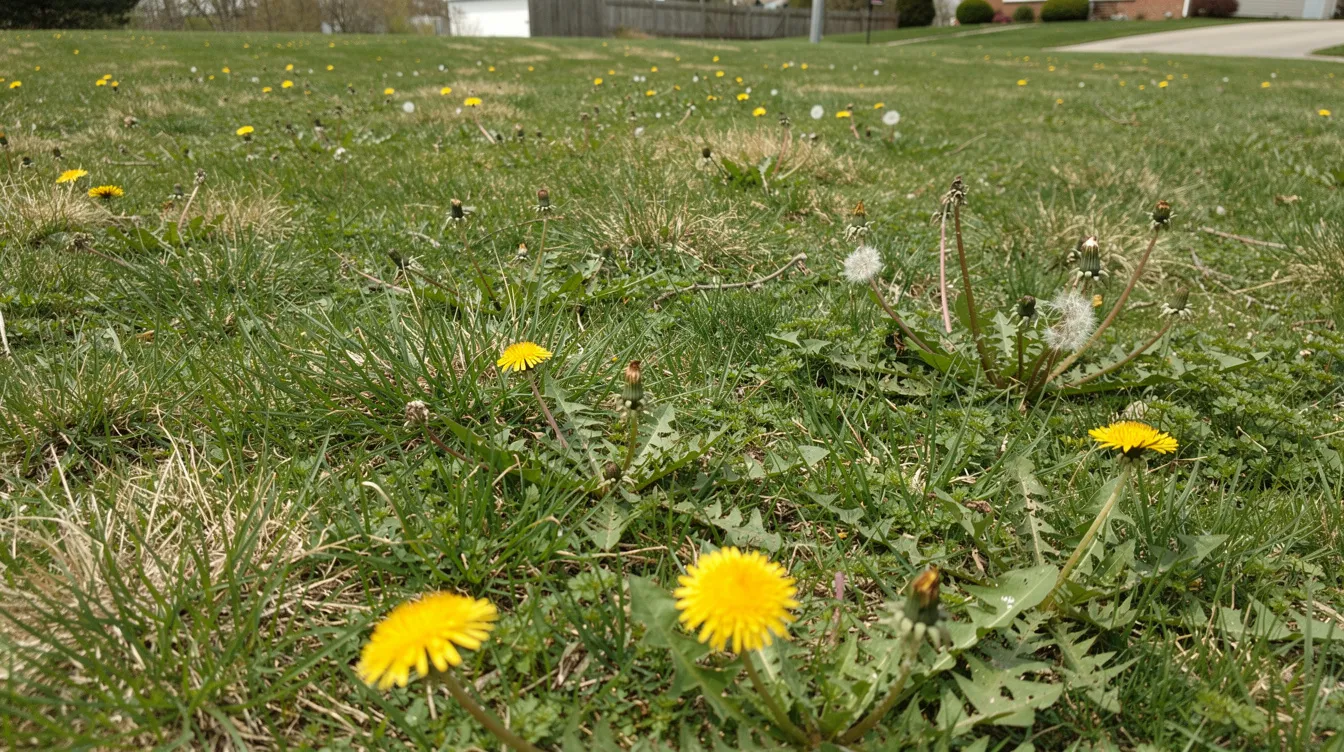
Broadleaf weeds, nutsedge, and crabgrass often appear along hot pavement edges and compacted areas in July. Spot treatments using targeted spraying prove more effective and environmentally responsible than blanket applications across entire lawns.
Common summer lawn problems in CNY include grub damage, chinch bugs, and fungal issues like dollar spot or leaf spot. These problems appear as irregular dead patches, yellowing areas, or thin turf panels. Japanese beetles—prevalent throughout Central New York—can devastate ornamental plantings if left unchecked.
Regular pest control inspections of high-visibility turf (clubhouse lawns, pool surrounds, front streetscapes) catch small patches of damage before they spread. Partner with a professional maintenance company to time grub control and disease prevention treatments, especially on properties with a history of problems.
Mid-Season Fertilization and Bed Care
Apply a light to moderate summer fertilizer (often in June or early July) tailored for cool season grasses. Avoid heavy nitrogen during peak heat spells—this forces top growth at the expense of roots and stresses already-taxed turf.
Summer is prime time to maintain annual color beds and planters at entry signs, pool areas, and leasing offices. Deadheading, pinching, and supplemental watering keep these high-visibility plantings looking fresh during peak leasing tours and resident events.
Keep shrub beds weed-free and mulch intact throughout summer. This attention to flower beds and planting areas presents a polished appearance when it matters most. Trim hedges and foundation plantings in mid-summer to keep sightlines open for security cameras, parking lots, and building entrances—a detail many homeowners overlook but property managers must address.
Fall Lawn and Landscape Maintenance for Apartments (September–November)
September through early November represents the most important season for rebuilding cool season lawns after summer stress. This window provides ideal conditions for core aeration, overseeding, and heavier fertilization that strengthens turf heading into winter.
For tree-heavy apartment properties, fall also brings critical leaf management needs. The work you complete now sets up lawns and plantings to handle winter snow loads and emerge stronger next spring, reducing future repair costs.
Aeration, Overseeding, and Fall Fertilizer
Schedule core aeration across large apartment lawns and high-traffic zones in September or early October, when soil is moist and temperatures are cooler. Fall aeration outperforms spring efforts because grass roots grow aggressively while weed competition decreases.
Overseed immediately after aeration using high-quality cool season blends suited to Central New York. This combination helps thicken turf and repair pet damage, play areas, and desire paths where residents have created their own shortcuts. New grass establishes before winter dormancy, emerging thick and healthy in spring.
Apply fall fertilizer high in potassium to support root growth—usually once in early fall and again in late October if turf is heavily used and conditions allow. Late-fall fertilization with slow-release nitrogen (approximately 1 pound per 1,000 square feet) builds root reserves that power strong spring green-up.
Focus these treatments on front-facing lawns, main entries, and leasing-office approaches where a beautiful lawn most affects curb appeal and tenant impressions.
Leaf Removal and Late-Season Mowing
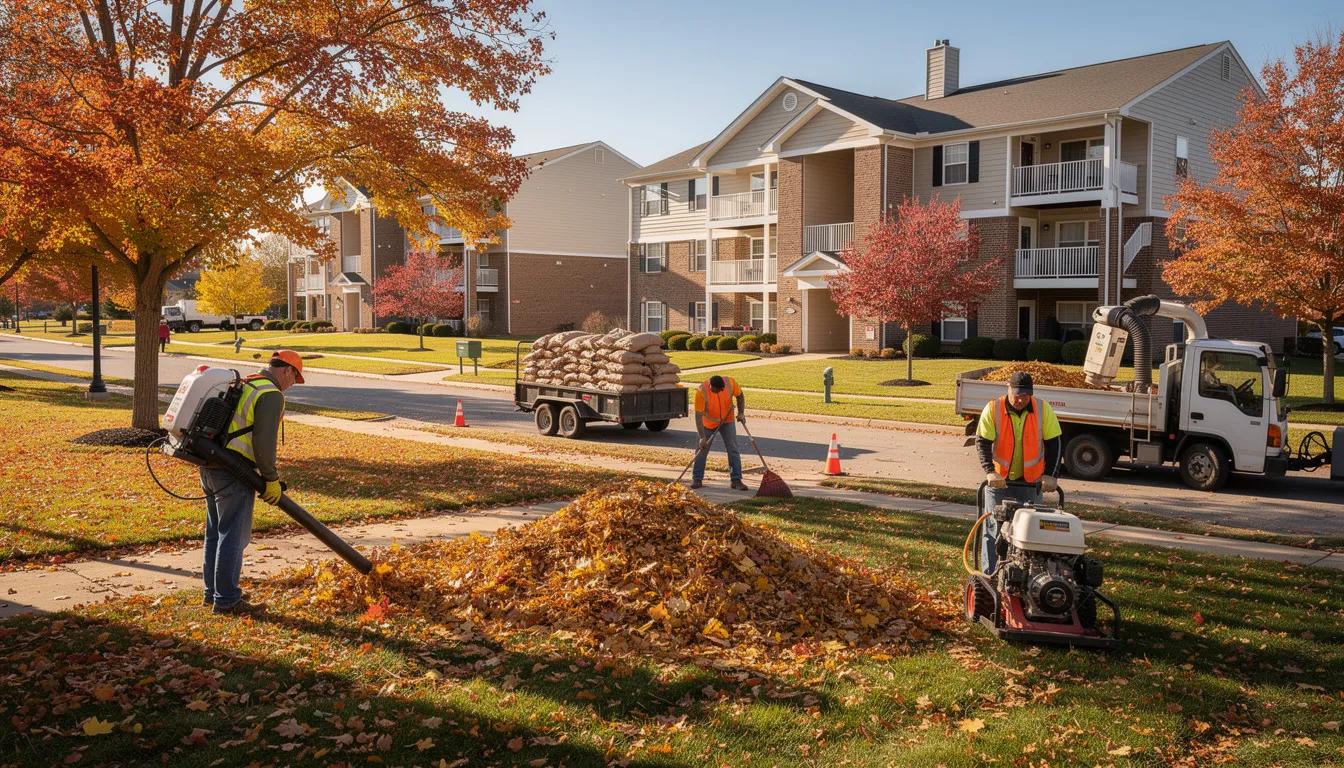
CNY properties with many maples, oaks, or ornamental trees should plan multiple rounds of leaf cleanup—often weekly or biweekly—from October through mid-November. Leaf volume surprises many property managers who haven’t budgeted sufficient cleanup passes.
Leaving thick leaf layers on lawns leads to dead patches, snow mold, and complaints about slippery sidewalks or messy play areas. Matted leaves smother grass and create ideal conditions for fungal diseases that become visible only after snow melts.
Gradually lower mowing height by about half an inch for final cuts of the year, ending around 2-2.5 inches. This reduces matting and disease risk under snow while keeping grass blades from laying flat and smothering.
Mulching leaves with mowers works well on broad open lawns, returning nutrients to soil. However, haul away heavy accumulations from fence lines, corners, and playground zones where leaves collect faster than decomposition can handle.
Pruning, Plant Protection, and Bed Cleanup
Prune out dead, diseased, or damaged wood from trees and shrubs along drive lanes and parking areas before winter storms arrive. This reduces winter breakage risk and potential liability from falling branches.
Cut back perennials in entrance beds and around signs, removing spent foliage and seed heads that can harbor disease or look untidy through winter. Many homeowners handle this in spring, but commercial properties benefit from fall cleanup that maintains neat appearance even during shoulder seasons.
Install protective wraps on young or vulnerable trees, especially near plow routes and parking lots where salt and mechanical damage pose concerns. Burlap wraps on evergreens like arborvitae help prevent winter burn from frozen winds that can cause up to 50% moisture loss in foliage.
Add or refresh mulch around shrubs and perennials in late fall to insulate roots and provide a neat appearance even after snow melts mid-winter. This relatively small investment pays dividends in plant survival and spring readiness.
Winter Property and Grounds Care for Apartment Communities (December–February)
While grass growth stops in winter, property owners still significantly influence lawn health through snow and ice management decisions. CNY’s 100+ inches of annual snowfall means your plowing practices directly impact spring repair costs.
The relationship between snow management and landscape care deserves careful attention. Decisions made along parking lots, sidewalks, fire lanes, and building entries determine whether you’ll face minor touch-ups or major turf renovations come April.
Snow, Ice, and Salt Management Impacts on Lawns
Repeated plow passes can scalp turf and push soil away from curbs, leading to ruts and bare strips requiring major spring repair. Each winter, salt damage alone kills 10-15% of roadside shrubs in urban and suburban settings.
Designate snow storage areas away from prime lawn and planting beds whenever possible. On sloped sites, consider where meltwater flows—piling snow uphill from key turf areas concentrates salt and creates washout patterns.
Use de-icing products labeled as turf-friendly where feasible, minimizing rock salt near grass, ornamental plantings, and pet areas. The few dollars saved using cheaper salt often cost far more in spring restoration.
Coordinate with plow contractors on clear boundaries. Stake lawn edges and parking islands in late fall to prevent accidental turf damage from operators who can’t see edges under snow. This simple step saves money and prevents recurring damage in the same locations year after year.
Protecting Dormant Turf and Landscape Features
Repeated foot shortcuts across snow-covered lawns between buildings, parking lots, and mail centers compact soil and tear turf when thaw periods occur. What looks like harmless walking through snow creates compacted paths that struggle to recover.
Install temporary fencing, rope lines, or visual cues that guide residents toward sidewalks instead of cutting across key lawn areas. This protects turf while reducing the “desire paths” that develop through high-traffic zones.
Benches, grills, and portable amenities should be placed or stored in ways that avoid dead patches under them once snow recedes. Furniture left on grass through winter creates irregular dead zones that mar spring appearance.
Conduct occasional winter walkthroughs to note where snowmelt ponds, ice repeatedly forms, or residents create new pathways. These observations inform spring drainage solutions and design changes that address problems permanently rather than repeatedly.
Planning Ahead for Next Season
Review maintenance records and photos from the prior year during winter months to identify recurring trouble spots and budget needs. This downtime allows thoughtful planning rather than reactive scrambling.
Compare resident service requests and complaints—muddy dog areas, lack of shade, poor drainage—against current landscape design. Patterns in complaints often reveal opportunities for one-time improvements that eliminate ongoing maintenance headaches.
Use winter to line up multi-year maintenance contracts, secure spring cleanup dates, and schedule larger improvements like bed redesigns or turf conversions. The best lawn care companies in CNY fill their spring calendars early.
CGM Property Services can meet with CNY property owners during winter to build customized, seasonal maintenance plans tied to realistic budgets. This proactive approach ensures you’re ready when spring arrives rather than scrambling for available contractors.
Special Considerations for Apartment, HOA, and Multi-Building Properties
Large residential communities operate differently than single homes. Many homeowners can experiment with their yards, but property managers need maintenance plans tailored to shared spaces, higher usage intensity, and diverse resident expectations.
Safety, accessibility, regulatory compliance, and operational efficiency shape yard and lawn strategies around apartment buildings in ways that don’t apply to typical residential lawn care. Understanding these factors helps managers align landscape work with operational and leasing goals.
High-Traffic Areas and Pet Use
Identify typical high-wear zones: building entrances, sidewalks between parking and buildings, mail centers, bus stops, dog walk paths, and playground surrounds. These locations see traffic levels that would destroy any residential lawn within weeks.
More durable turf varieties, reinforced paths, or hardscape solutions work better in spots that never stay green despite constant feeding and attention. Sometimes the best solution isn’t better grass—it’s pavers, gravel, or synthetic turf designed for heavy use.
Dedicate and clearly mark pet relief areas with appropriate surface treatments plus waste stations. This concentrates damage and odors in manageable zones while protecting the rest of your grounds. Without designated areas, pets use the entire property, creating scattered damage everywhere.
Schedule more frequent cleanup and inspection around pet zones to manage odors, repair damage quickly, and maintain resident satisfaction. Pet areas that receive weekly attention outperform those checked monthly in both appearance and resident happiness.
Safety, Accessibility, and Compliance
Landscape maintenance must consider clear sightlines at drive entrances, intersections, and parking lots. Overgrown shrubs obscuring driver vision create liability exposure and may violate local codes.
Prune shrubs and low branches near sidewalks, steps, and lighting to maintain ADA accessibility and reduce trip or visibility hazards. This isn’t just good practice—it’s often legally required for commercial properties.
Snow and ice removal plans should coordinate with landscape features so ramps, curb cuts, and fire hydrants remain unobstructed. Emergency access requirements don’t disappear under snow.
Document maintenance schedules and treatments to support compliance with local and state regulations, particularly for pesticide and fertilizer applications. The family living near treated areas deserves notification; proper documentation protects both residents and property owners.
Noise, Scheduling, and Resident Communication
Plan mowing and major cleanup operations during times that balance operational efficiency with resident comfort. Avoid very early mornings near bedroom windows when possible—your neighbors and tenants will appreciate this consideration.
Post seasonal maintenance calendars in lobbies, resident portals, or email newsletters. When residents know to expect leaf cleanups, fertilization, or pruning work, complaints decrease dramatically. Surprise disruptions generate complaints; scheduled work becomes routine.
Communicate clearly about temporary access limitations during tree pruning near parking areas or playground maintenance. Brief inconvenience becomes major frustration when residents aren’t informed.
CGM Property Services coordinates with on-site management to create predictable, resident-friendly service windows for recurring maintenance. This collaboration between property managers and maintenance crews keeps operations smooth and residents satisfied.
Budgeting and Working with a Professional Maintenance Partner
Multi-building properties benefit financially from planned, recurring landscape programs rather than sporadic, last-minute repairs. The cost of preventive maintenance almost always beats emergency restoration—and the difference in resident satisfaction is substantial.
Property managers can expect to pay a range of prices for different yard and lawn maintenance services, with most costs falling in the middle of national averages. Knowing what you might pay for each service helps with budgeting and avoids unexpected expenses.
Here are typical cost ranges for common lawn care services:
- General lawn care costs range from $99 to $282.
- The average monthly lawn care cost is between $100 and $410.
- Lawn mowing usually costs $32 to $68 per hour.
- Fertilization services typically range from $67 to $405.
- Weed control can cost between $50 and $210, depending on the method used.
- Aeration services generally cost $107 to $202.
- Leaf removal costs range from $107 to $435, based on lawn size and cleaning method.
- Sod installation for a 1,000 to 1,500 square foot lawn can cost between $2,028 and $3,394.
- Tree trimming typically costs $430 to $640 per tree.
- Bush trimming averages around $46 per bush.
Understanding typical service groupings helps property owners structure cost-effective year-round contracts that deliver consistent results without budget surprises.
Core Services to Include in a Year-Round Program
Recurring weekly/biweekly services (April–October):
- Mowing at appropriate seasonal heights
- Edging along walkways, parking areas, and signage
- String trimming around obstacles, furniture, and structures
- Debris collection and disposal
Seasonal services:
- Spring cleanup (debris removal, bed preparation, initial fertilization)
- Fall leaf removal (multiple passes as needed)
- Shrub and hedge pruning (timing varies by plant type)
- Mulch installation (spring application, fall refresh)
- Bed maintenance and weed control
Periodic enhancements:
- Core aeration and overseeding
- Seasonal color plantings at entry monuments or leasing offices
- Tree trimming and removal
- Irrigation system startup, adjustments, and winterization
Consider creating different service tiers—basic, enhanced, premium—based on how often high-visibility areas receive detailed attention. Properties focused on lease-up may need premium services at entries while maintaining basic care elsewhere.
Cost Drivers for Apartment Landscape Maintenance
Total maintained acreage, number of buildings, and lawn accessibility serve as primary cost drivers. Just as lawn size affects residential pricing, property scale determines commercial landscape costs.
Additional factors affecting annual budgets:
- Steep slopes requiring specialized equipment
- Retaining walls and complex grading
- Large tree counts increasing leaf removal time
- Mature landscapes with extensive pruning needs
- Distance between property sections affecting crew efficiency
Heavily shaded or chronically wet areas may require more frequent interventions or design changes. Properties that invest in drainage improvements, shade-tolerant plantings, and durable surfacing in problem areas typically see lower annual maintenance costs than those repeatedly repairing the same issues.
Factor in savings from preventative work—aeration, proper drainage, timely pruning—versus recurring emergency repairs and resident complaints. The property that spends moderately on consistent care almost always outperforms the property that defers maintenance and pays premium rates for urgent fixes.
Choosing and Evaluating a Maintenance Partner
Seek companies with experience specifically in commercial, HOA, and multi-family maintenance. Single-family lawn care operates differently than managing grounds across multiple buildings, shared amenities, and diverse zones.
Request site walks, written scopes of work, and clear seasonal calendars from prospective partners before signing agreements. Vague proposals lead to mismatched expectations and disputes about what’s covered in the contract.
Check references from other CNY apartment or HOA clients. Ask about reliability, quality consistency, responsiveness to service requests, and communication during weather disruptions. Local businesses with established reputations in your market typically outperform app-based services or national chains on commercial properties.
CGM Property Services offers transparent estimates, detailed seasonal plans, and ongoing communication aligned with property goals. As a CNY-based lawn care company, CGM understands the specific challenges of maintaining apartment landscapes through every Central New York season.
Frequently Asked Questions About Yard and Lawn Maintenance
How often should an apartment complex in Central New York mow its lawns?
Most CNY apartment properties schedule weekly mowing from roughly late April through September, then shift to biweekly as growth slows in October. Growth rates vary by year and microclimate—cool, wet springs accelerate growth while hot, dry summers slow it considerably.
Prioritize visual consistency around entries and main lawns even if some low-growth areas are cut slightly less often. The “one-third rule” applies regardless of frequency: never remove more than one-third of blade height to protect turf health during fast spring growth periods.
When is the best time to aerate and overseed apartment lawns in CNY?
Late summer to early fall—typically September and early October—represents the ideal window in Central New York for core aeration and overseeding cool season grasses. Soil remains warm enough for seed germination while cooler air temperatures reduce stress on new seedlings.
Spring aeration is possible for heavily compacted sites, but fall generally produces better long-term results with fewer weed problems. Schedule these services well in advance; many local contractors fill their fall calendars quickly once Labor Day passes.
How can property owners reduce lawn damage from snow and salt near parking lots?
Plan snow storage locations that avoid piling heavy, salty snow directly on key lawn areas and ornamental beds. Snow stored on grass melts slowly, concentrating salt damage in those locations through repeated freeze-thaw cycles.
Use turf-friendly de-icers near grass edges and walkways where possible, reserving rock salt for critical high-risk areas only. In spring, damaged strips along curbs and sidewalks can be flushed with water to dilute salt, then raked, topdressed, and overseeded to speed recovery.
What maintenance tasks should be prioritized if my budget is limited?
Focus first on safety-critical tasks: snow and ice management, sightline pruning at intersections, and trip-hazard corrections along walkways and entries. These items carry liability implications that justify priority spending.
Maintain consistent mowing and cleanup schedules while staging more intensive work—like full bed renovations or turf reconstruction—over several years. CGM Property Services can help design phased maintenance plans that protect property image and resident satisfaction within realistic budget constraints, tending to critical needs first while planning improvements over time.
Do I need different landscape plans for each building in a large apartment community?
While the overall maintenance program can be unified under a single contract, different zones may need distinct mowing heights, irrigation scheduling, and plant selection strategies. Shaded courtyards, sunny open fields, pet areas, and entry gardens each present different growing conditions.
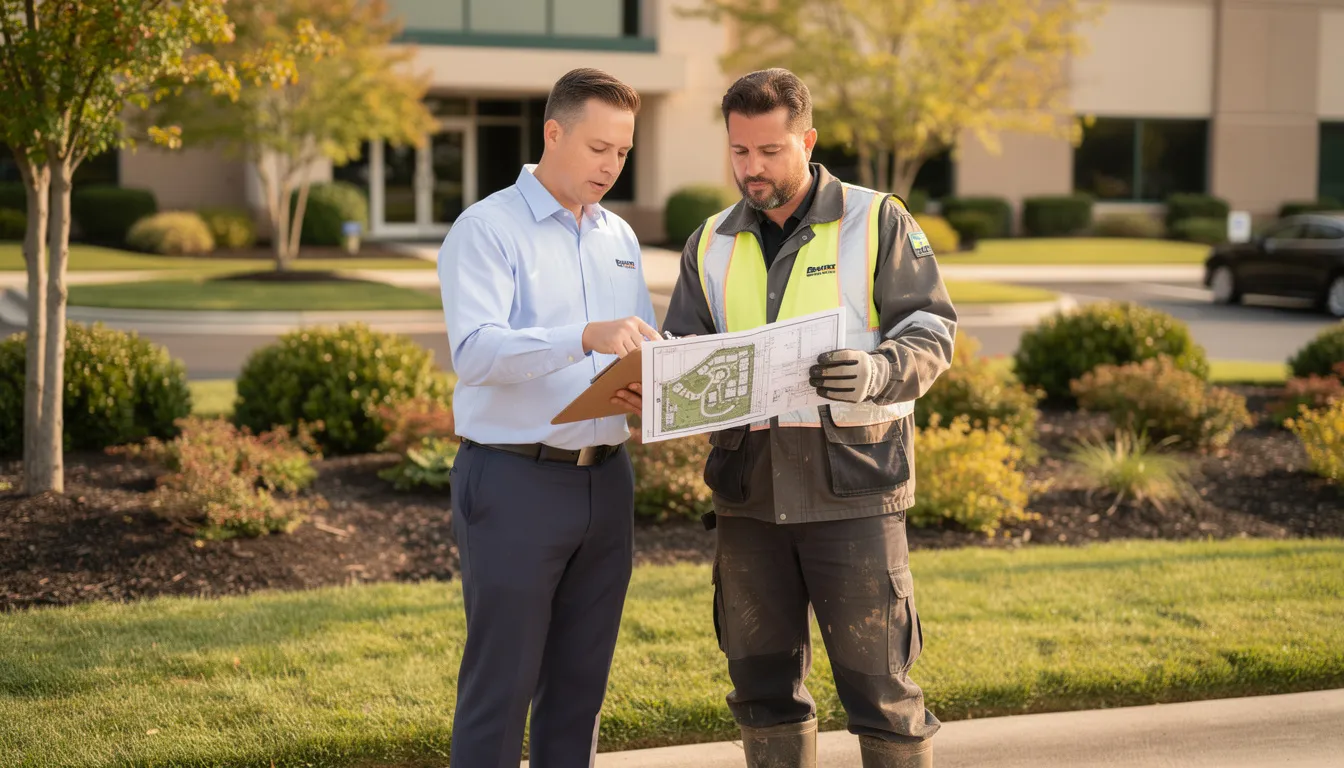
Divide your property into management zones based on use patterns and microclimate, then tailor task frequencies to each zone. A professional partner like CGM can map and prioritize these zones so maintenance crews work efficiently while delivering consistent quality across the community. This approach prevents crews from treating every location identically when site conditions clearly differ.