Common Lawn Weeds in New York (Especially Around Syracuse & Central NY)
If you've ever looked across your Syracuse yard and noticed patches of something that clearly isn't the grass you planted, you're not alone. New York lawns - particularly in Central NY - face a relentless mix of weeds that exploit every thin spot, shady corner, and compacted path. This guide covers the most common lawn weeds in New York, how to identify them, what they're telling you about your soil, and how to fight back.
Key Takeaways
- Syracuse and Central New York lawns battle both grassy weeds (crabgrass, annual bluegrass, goosegrass) and broadleaf weeds (dandelions, white clover, ground ivy/creeping Charlie) due to seasonal changes that bring cool-season and summer weeds in waves.
- Many common weeds signal underlying lawn problems: compacted soils, poor drainage, low fertility, or mowing too short - fixing these issues is often more effective than herbicide alone.
- Some invasive species like Japanese knotweed and Canada thistle are regulated or strongly discouraged in New York and can spread rapidly from neglected lawn edges and fence rows.
- Weeds compete with grass for nutrients, water, and sunlight - maintaining a thick lawn makes it harder for weeds to establish themselves.
- CGM Property Services offers residential and commercial lawn care and weed control across Syracuse, Liverpool NY, and greater Central New York, with transparent pricing and free estimates.
Understanding Lawn Weeds in Central & Upstate New York
A lawn weed is simply any plant growing where turfgrass is desired. That includes everything from a dandelion in your front yard to chickweed creeping out of a landscape bed along your foundation. In Syracuse and surrounding towns like Liverpool, Clay, and Baldwinsville, lawns typically use cool-season turf - Kentucky bluegrass, perennial ryegrass, and fescues - which thrive in our cold winters and moderately warm summers.
New York lawns face a mix of cool-season and summer weeds due to seasonal changes. Grassy weeds like crabgrass explode in July heat, while broadleaf weeds like dandelions and clover take hold in spring and fall. There's also an important distinction between common weeds and noxious or invasive weeds. Species like Canada thistle and Japanese knotweed aren't just annoying - they're regulated under New York State law and can cause ecological and structural damage.
This guide focuses on the weeds homeowners and property managers in Central NY are most likely to encounter. CGM Property Services uses careful weed identification combined with soil and turf health assessment to recommend the right lawn care and treatment plan for each property.
Grassy vs. Broadleaf Weeds: Quick ID Basics
Most lawn weeds fall into two main groups: grassy weeds and broadleaf weeds. Knowing which type you're dealing with determines your entire control strategy.
Grassy weeds have narrow leaves with parallel veins and look somewhat like turfgrass. Grassy weeds typically include species like crabgrass, annual bluegrass (Poa annua), goosegrass, and quackgrass. They blend into the lawn until they form obvious clumps or produce seed heads.
Broadleaf weeds are characterized by wider leaves compared to grass-like weeds, often with showy yellow flowers, purple flowers, or pink flowers. Common examples include dandelions, white clover, ground ivy (creeping Charlie), plantain, chickweed, and Canada thistle.
Many common weeds in New York lawns can be categorized into broadleaf, grassy, and sedge types. The distinction matters because selective chemical herbicides and cultural controls typically target either grassy weeds or broadleaf weeds - not both. Using the wrong product wastes money and can damage your turf.
Some "grass-like" weeds - like yellow nutsedge - are actually sedges with triangular stems and need specific products. Cornell's Turfgrass Weed Identification Tool is a helpful resource for identifying weeds, and professional services like CGM Property Services can apply the correct treatments when weed identification gets tricky.
Signs Your Syracuse Lawn Is Vulnerable to Weeds
Weeds don't just appear randomly. They exploit specific weaknesses in your lawn. Weeds often invade due to soil compaction and improper lawn care practices. Here are the conditions that make Central NY lawns especially vulnerable:
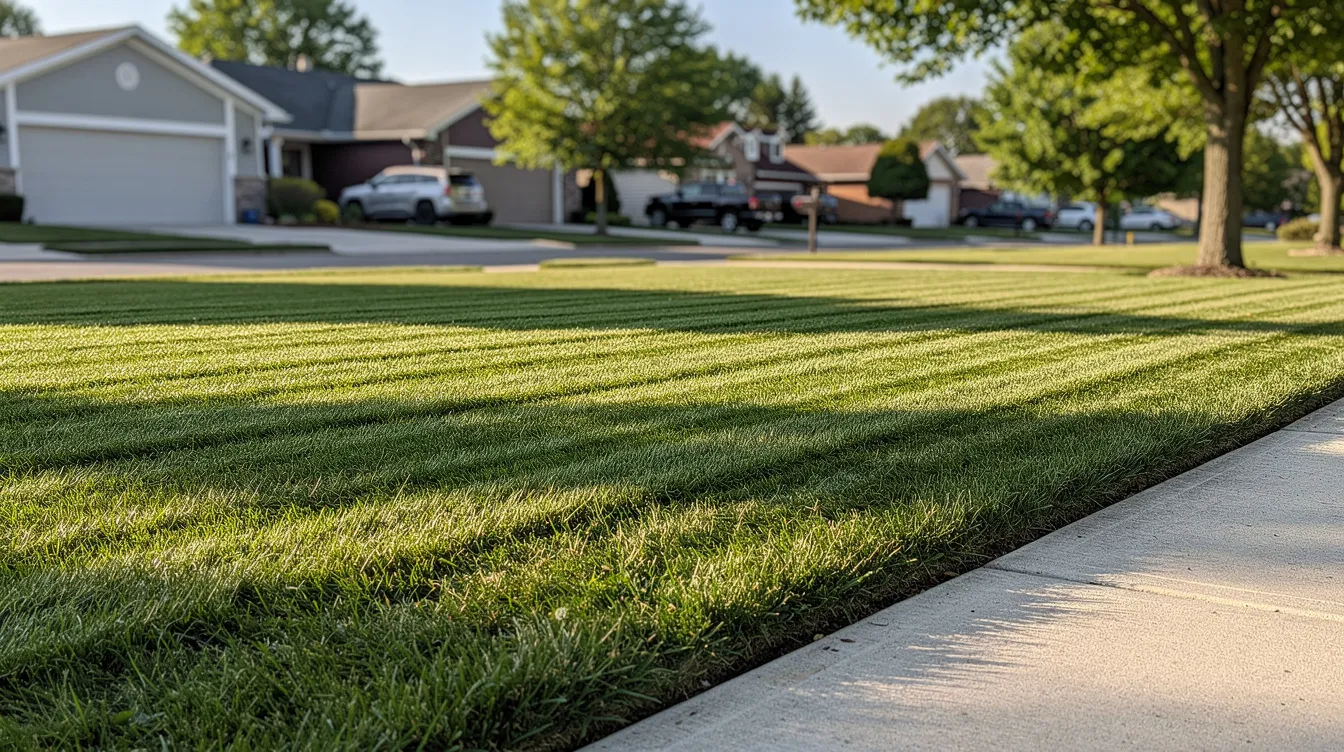
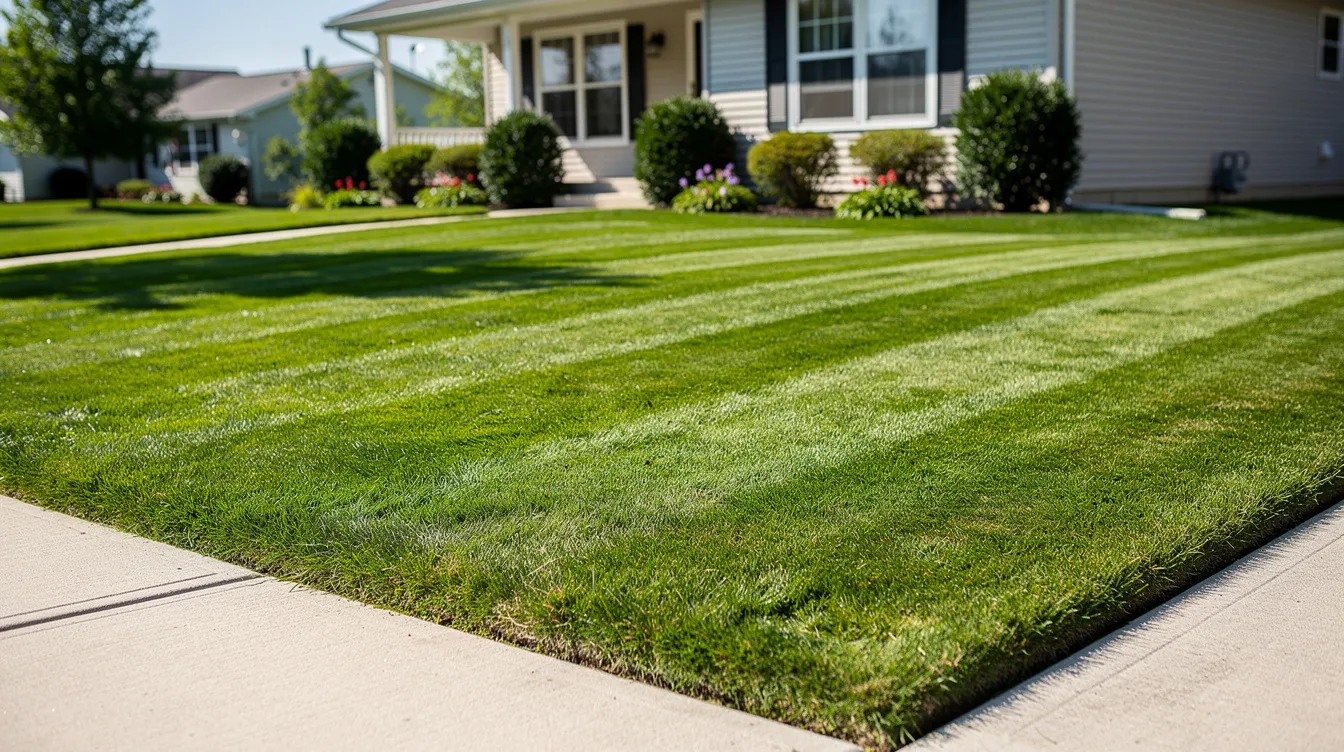
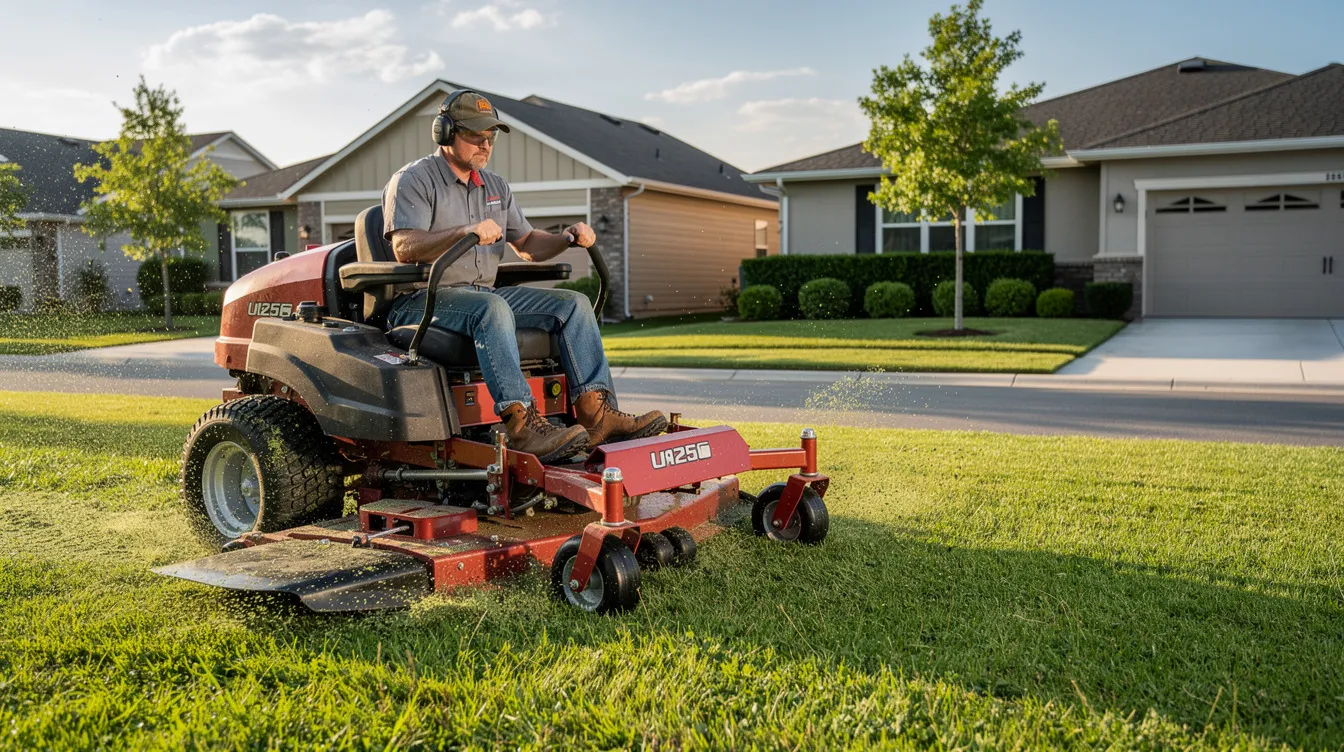
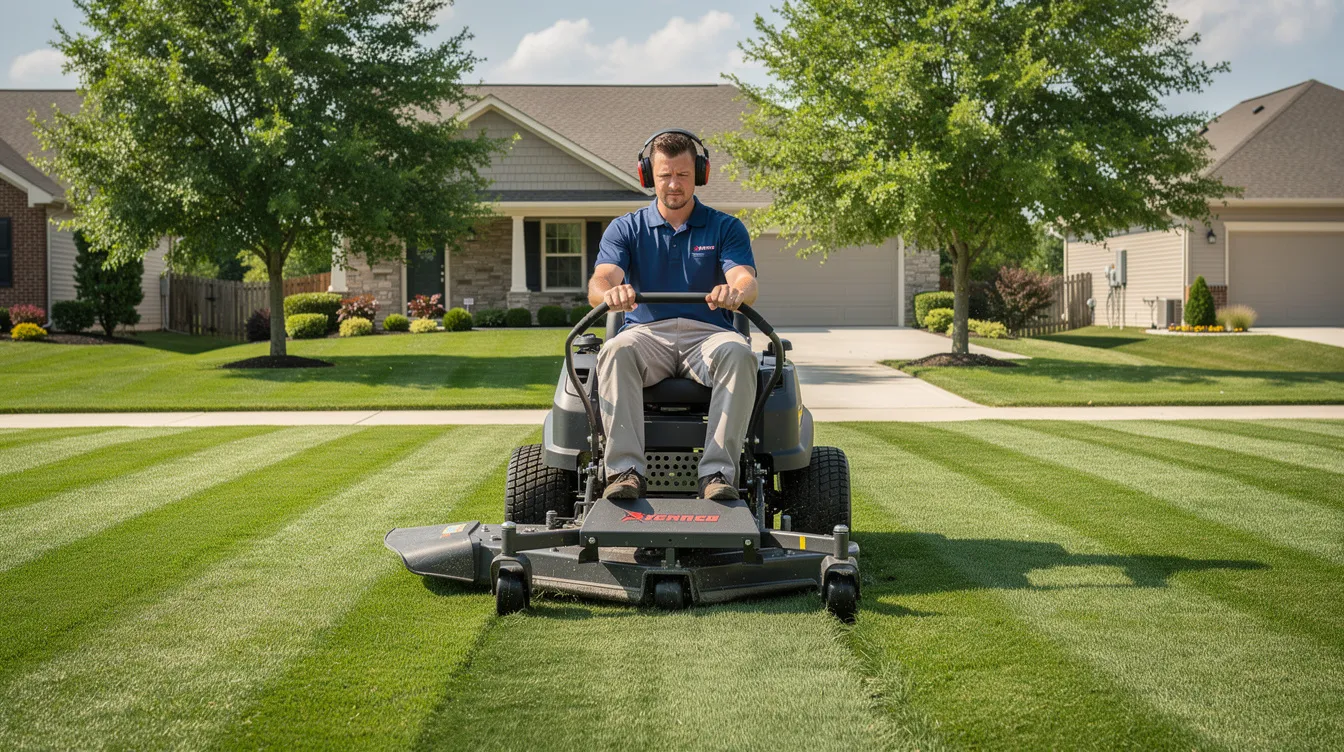
- Mowing too short. Cutting below 3 inches exposes bare soil to sunlight, letting weed seeds germinate. Proper mowing height is 3–3.5 inches for healthy grass.
- Compacted soil. Foot traffic, parking on turf, and heavy snow piles compress Syracuse's clay-heavy soils, favoring crabgrass, goosegrass, and broadleaf plantain.
- Poor drainage and standing water. Low spots that collect snowmelt and spring rain encourage annual bluegrass, yellow nutsedge, and moss - extremely common in Central NY yards.
- Low fertility and thin turf. When nitrogen is depleted and turf thins out, opportunistic broadleaf weeds like white clover, dandelion, and chickweed move in fast.
- Shade from mature trees. Older Syracuse neighborhoods have dense canopy cover that weakens turf and favors shade-loving weeds like ground ivy and chickweed.
Soil testing can help determine nutrient deficiencies for effective lawn management. Spring and fall cleanups, aeration, and overseeding from CGM Property Services help correct many of these underlying issues before weeds take hold.

Common Broadleaf Weeds in New York Lawns
Broadleaf weeds are the most visible invaders in Central New York yards. They flower, spread seed, and stand out against turf. Here are the ones you'll see most often:
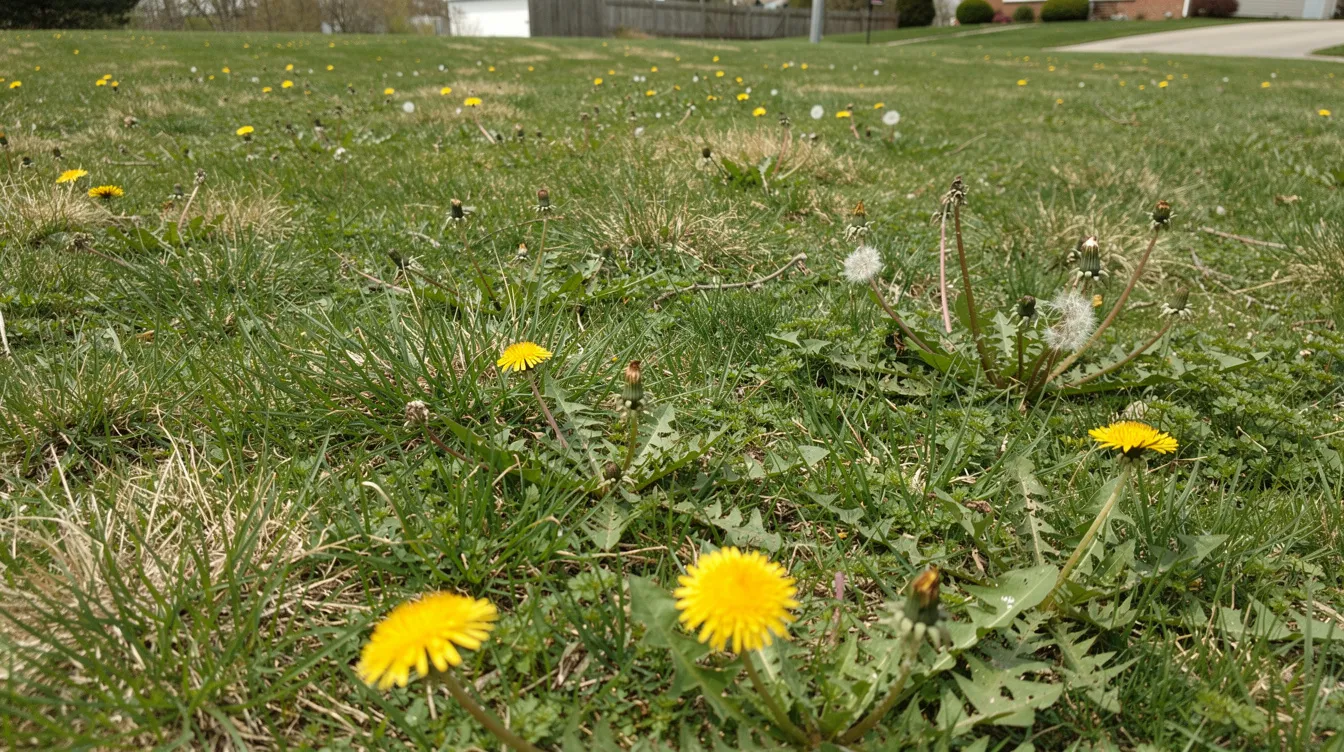
Dandelion (Taraxacum officinale) - Dandelions are perennial broadleaf weeds found everywhere. They form a basal rosette of jagged leaves with bright yellow flowers in early spring and early summer, followed by familiar puffball seed heads. Dandelion typically emerges in early spring and has a deep taproot. A single plant can produce up to 15,000 seeds, and those seeds spread across Syracuse yards via wind and mowing. Dandelions reproduce from taproots left in the soil, which means dandelions require deep digging to remove taproots completely.
White clover (Trifolium repens) - White clover often indicates soil with low nitrogen and features compound leaves with three leaflets. It produces small white or slightly pink flowers in ball-shaped clusters. Some homeowners tolerate clover as a ground cover, but dense large patches signal a fertility problem that needs correction.
Broadleaf plantain and buckhorn plantain - These perennial plants form flat rosettes of oval leaves that tolerate compaction and heavy foot traffic. You'll find established plants thriving along sidewalk cracks and driveways throughout Syracuse neighborhoods.
Chickweed and yellow woodsorrel - Chickweed is a cool-season annual (often a winter annual) that thrives in moist, shady areas. It forms dense mats in partial shade near foundation beds and overwatered lawns. Yellow woodsorrel has heart shaped leaves and small yellow flowers, thriving in acidic, shady lawns.
Ground ivy / creeping Charlie - A very persistent mint family weed in Syracuse shade lawns, with scalloped edges on its leaves and small purple flowers creeping under fences and shrubs. More on this one below.
Creeping Charlie (Ground Ivy): A Shady-Lawn Menace
Creeping Charlie (Glechoma hederacea) deserves its own section because it's one of the toughest broadleaf weeds to remove from shaded New York lawns. Ground ivy spreads aggressively and prefers shady areas, making it a constant headache in older Syracuse neighborhoods with large trees.
Appearance: Square stems (a hallmark of the mint family), heart-shaped leaves with scalloped edges, a minty scent when crushed, and small funnel-shaped purple-blue flowers in spring. Ground ivy thrives in shaded, damp areas and forms dense mats under trees and along foundations. The attractive foliage can look almost pleasant until it swallows your entire lawn.
How it spreads: Ground ivy spreads through creeping stems that root at every node. Young plants establish rapidly, and mature seeds disperse to start new colonies. It easily crosses property lines, invading from neglected areas or garden beds.
Why DIY control fails: Many general weed-and-feed products barely stunt it. The entire plant needs to be targeted with specific broadleaf herbicides, often requiring multiple applications over a season.
CGM Property Services uses a combination of selective broadleaf herbicides, improved drainage, pruning to increase sunlight, and overseeding with shade-tolerant turf to gradually drive creeping Charlie out of shady lawns across Syracuse and surrounding communities.
Other Problem Broadleaf Weeds: Canada Thistle and More
Some broadleaf weeds aren't typical lawn invaders - they start at property edges, along fence rows, and in adjacent garden beds, then push inward.
Canada thistle (Cirsium arvense) - This noxious weed grows tall stems (2–4 feet) with spiny leaves and clusters of purple flowers in July and August. Its extensive system of creeping roots makes it a perennial plant that's nearly impossible to kill with a single treatment. Canada thistle is listed as an invasive species in many jurisdictions due to its aggressive root system and prolific seed production.
Field bindweed - A vine-like perennial with white or pink flowers (small trumpet shapes) and a deep, long-lived root system. It invades from adjacent lots or old fields into fence rows and lawn margins.
Ragweed - Common ragweed (Ambrosia artemisiifolia) and giant ragweed (A. trifida) colonize un-mowed corners and ditches. Common ragweed can produce up to a billion pollen grains, making it a major contributor to late summer hay fever around Syracuse. Hand pull young shoots before they set seed to reduce next year's population.
While these aren't classic "lawn weeds," they quickly invade unless regularly mowed, trimmed, and managed. For multi-year perennials like Canada thistle, CGM Property Services combines mowing, spot herbicide treatments, and improved turf density to reduce regrowth over several seasons.
Grassy Weeds: Crabgrass, Goosegrass, and Friends
Grassy weeds look like coarse or off-color grass and blend into Central NY turf until they form obvious clumps or mats in summer.
Crabgrass (Digitaria spp.) - Crabgrass is a summer annual that thrives in compacted soil. It has a low, spreading habit with a light green to lime-colored appearance and thick blades. Crabgrass can grow up to 2 feet tall in undisturbed areas, though it usually stays low in mowed lawns. It germinates in late spring when soil temperatures hit 50–55°F, colonizing thin, sunny, compacted areas like curb strips and driveway edges. Crabgrass seeds can remain viable in soil for at least 3 years, meaning one bad season of seed production haunts you for years.
Goosegrass (Eleusine indica) - Similar to crabgrass but with a distinctive rosette "wagon wheel" center and later germination (June–July). It thrives in hard-packed soil, especially heavy foot-traffic areas near sidewalks.
Quackgrass (Elymus repens) - A perennial with aggressive rhizomes, coarser than turf, often invading from fields or neglected lots on the outskirts of Syracuse and suburban areas like Liverpool. Its root system makes it extremely difficult to eliminate without repeated treatments.
These annual grass and perennial grass weeds compete fiercely in hot, dry weather. Pre-emergent control and regular mowing are essential to keeping them out.

Annual Bluegrass (Poa annua) in New York Lawns
Annual bluegrass is a very common "off-type" grass in cool-season lawns across New York, including Syracuse and surrounding towns. It's technically an annual weed, though some biotypes behave as short-lived perennials.
Annual bluegrass often occupies bare spots and has fine, bright green leaves. It produces constant seed heads - even at low mowing heights - giving the lawn a patchy, light green appearance, especially in spring. Look for boat-shaped leaf tips and a softer texture than your desired turf.
It thrives in compacted, moist, shaded areas and frequently irrigated lawns, often showing up along sidewalks, around sprinkler heads, and in low spots where poor drainage keeps soil consistently wet. In cool weather, it can dominate areas where desirable turf has thinned.
CGM Property Services focuses on correcting moisture and compaction issues, adjusting mowing height, and using seasonal pre-emergent strategies to gradually reduce annual bluegrass populations in Syracuse-area lawns.
Grass-Like Weeds and Sedges: Yellow Nutsedge and Similar Invaders
Some "grassy weeds" are actually sedges or rushes. They won't respond to standard grass herbicides, which is why proper weed identification matters.
Yellow nutsedge (Cyperus esculentus) is the most common sedge in Central NY lawns. Yellow nutsedge can grow up to 3 feet tall and thrives in moist areas. It has bright green leaves that are noticeably more upright and glossy than turf, with triangular stems (remember: "sedges have edges") and yellow-brown seed heads.
Nutsedge spreads by underground tubers (nutlets), making hand-pulling alone unreliable - any remaining tuber will sprout new plants the next year. Those underground tubers can remain viable in the soil for years, making eradication a long-term project.
Yellow nutsedge often appears in Syracuse lawns after wet springs, around downspouts, and in over-irrigated areas. Professional selective sedge herbicides plus drainage fixes - which CGM Property Services can recommend or coordinate - are key to long-term control.
From Garden Weed to Lawn Invader: Chickweed, Pigweed, Amaranthus spp., and More
Many "garden weeds" migrate from vegetable crops, landscape borders, and flower beds into nearby lawns if not controlled. The compost pile, the veggie garden, the unmulched bed - all can be weed seed factories.
Chickweed (Stellaria media) - This cool-season garden weed forms mats of small oval leaves with tiny white flowers along bed edges and can creep into thin turf during spring and fall. Chickweed is a winter annual that germinates in cool weather. Common chickweed can produce approximately 800 seeds per plant, quickly building a seed bank. Young leaves are edible and were historically used by Native Americans and European settlers, offering modest health benefits, though in your York lawn they're simply unwanted competition.
Pigweed / Amaranthus spp. - Tall, summer annual broadleaf weeds with a reddish tinge on stems. Young plants sprout in bare patches along fences or disturbed soil next to driveways and encroach onto turf. Lamb's quarters (Chenopodium album), a related garden weed, also appears in similar disturbed areas, recognizable by its dusty-looking young shoots.
Purslane - A low, succulent summer annual that's drought tolerant and thrives in full sun. It forms flat mats in bare lawn spots or between pavers, with thick, fleshy leaves and small yellow flowers.
Mulching garden beds helps prevent weed seed germination. Hand-pulling weeds is effective before they set seed and add to the seed bank. Keeping gardens weeded, mulched, and edged - services CGM Property Services offers as part of landscape maintenance - reduces the seed pressure on adjacent lawns.

Invasive Threats in New York Yards: Japanese Knotweed and More
Some invasive plants in New York can cause structural and ecological damage. Once established, they're extremely difficult to eradicate.
Japanese knotweed (Reynoutria japonica) has bamboo-like hollow stems, large shield-shaped leaves, and late-summer clusters of small white flowers. Japanese knotweed can grow up to 15 feet tall and is invasive - it's prohibited under New York's 6 NYCRR Part 575 regulations, meaning it cannot be legally sold, transported, or planted.
Knotweed spreads via rhizome fragments and soil movement. Even a small piece of root or stem with a node can regenerate into a new colony, making careless cutting or digging risky. It commonly appears along streams, fence rows, and neglected property corners throughout suburban Syracuse and rural Central NY communities.
Other plants like field bindweed and Canada thistle can also creep from natural areas into lawn margins. CGM Property Services can coordinate long-term, repeated control efforts - cut-back cycles, targeted herbicide applications in late summer, and site restoration - but eradication of established plants is typically multi-year, not instant.
How Common Weeds Signal Underlying Lawn Problems
Weeds aren't just problems - they're diagnostic clues about your soil and lawn conditions.
| Weed Present | What It Signals |
|---|---|
| Clover, dandelion, black medic | Low nitrogen, thin turf, possibly low pH |
| Crabgrass, goosegrass | Compacted soils, heat stress, bare soil, mowing too short |
| Annual bluegrass, moss | Poor drainage, overwatering, compacted soil |
| Ground ivy, chickweed | Dense shade, consistently moist soil, low mowing height |
| Yellow nutsedge | Overwatering, poor drainage in clay soils |
Sandy soil drains fast but loses nutrients. Syracuse's heavy clay retains moisture but compacts easily. Either way, soil testing reveals the full picture.
CGM Property Services evaluates weed patterns along with mowing height, irrigation habits, and soil type to design a lawn care plan that fixes root causes, not just symptoms. A dense lawn helps choke out new weed seedlings - the goal is always to build turf thick enough that other plants can't compete.
Integrated Weed Management: Beyond "Weed & Feed"
Integrated weed management combines cultural practices, targeted herbicides, and ongoing lawn care tailored to New York's climate.
Core cultural controls:
- Mow at 3–3.5 inches consistently
- Water deeply and infrequently (1–1.5 inches per week in summer) - watering deeply and infrequently promotes strong turf roots that outcompete shallow weeds
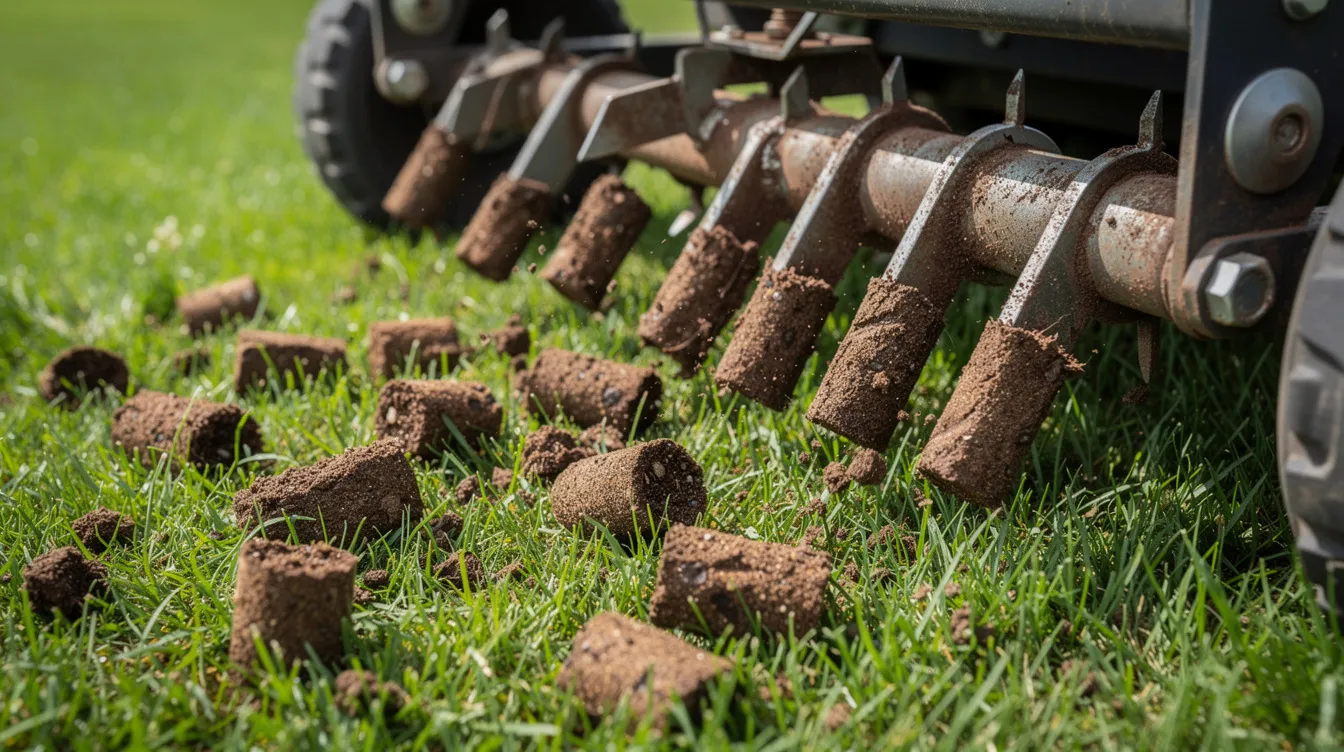
- Aerate compacted areas annually, ideally in early fall
- Overseed thin spots with quality seed in September
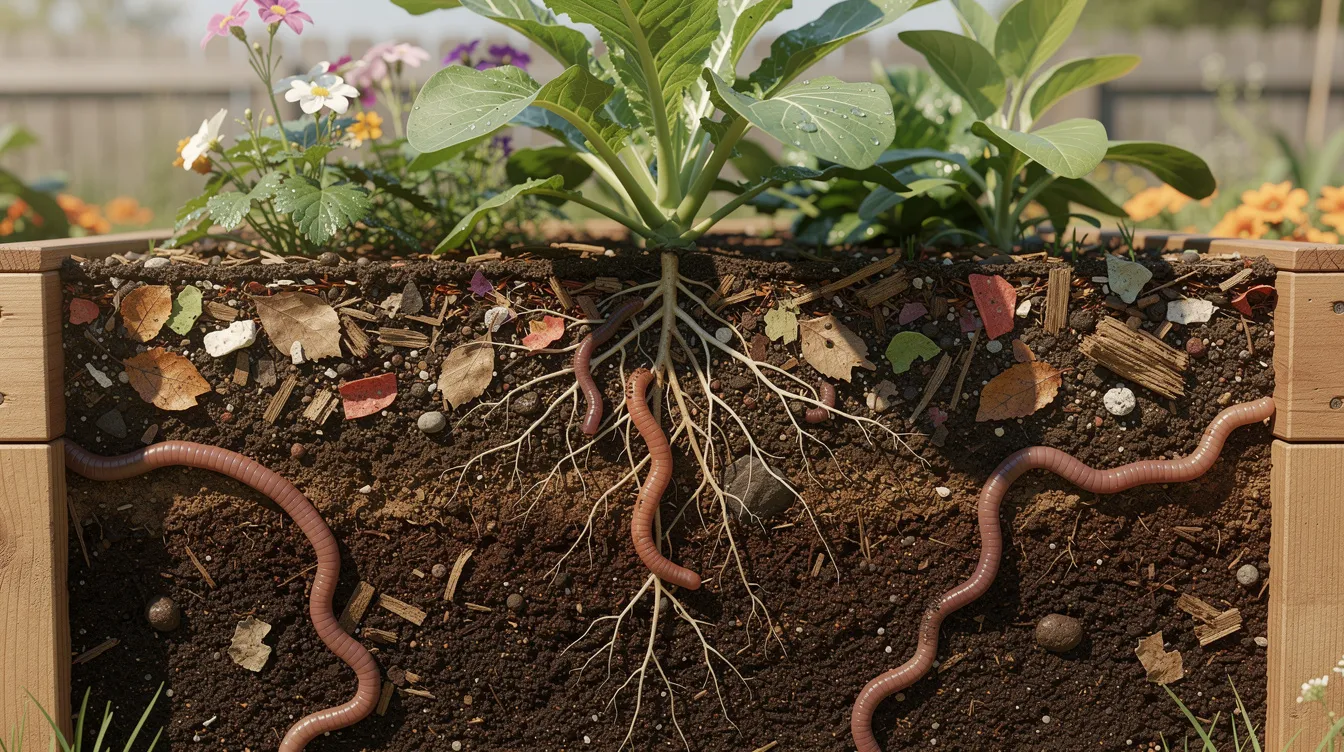
- Amend soil based on test results (lime for low pH, organic matter for clay)
Pre-emergent herbicides should be applied in early spring - when soil temperatures approach 50–55°F - to prevent crabgrass, annual bluegrass, and some broadleaf weed seeds from germinating.
Post-emergent herbicides are used on actively growing broadleaf weeds during spring or fall. Products containing triclopyr or 2,4-D target dandelions, plantain, and ground ivy. Sedge-specific products handle yellow nutsedge. Targeted herbicides should be used correctly according to the specific weed type - using a broadleaf weed killer on a sedge, for example, wastes product and time.
CGM Property Services uses seasonally timed programs - spring, summer, fall - to keep weeds in check for residential, commercial, and HOA lawn service clients in Syracuse and Liverpool NY.
DIY vs Professional Weed Control in Syracuse & Liverpool NY
For a few dandelions or a small patch of clover, DIY weed control can work fine. But there are common pitfalls:
- Misidentifying weeds - treating a sedge with a grass herbicide, or vice versa, gets you nowhere
- Wrong timing - applying pre-emergent after crabgrass has already germinated is wasted effort
- Incorrect application - wrong rates, wrong weather conditions, or spraying on windy days causes turf damage or drift
- Missing legal restrictions - some products are restricted in New York, and invasive species require specific handling
Professionals understand local conditions: CNY winters, lake-effect weather patterns, heavy clay soils, and New York State pesticide regulations. CGM Property Services offers transparent pricing, free estimates, and ongoing maintenance programs for homeowners, commercial properties, and HOAs - reducing guesswork and delivering better results.
Stubborn weed problems - ground ivy, nutsedge, Japanese knotweed, heavy crabgrass infestations - and large properties are especially good candidates for professional lawn service in Liverpool NY and the Syracuse metro area.
Working With CGM Property Services for Weed-Free Lawns
CGM Property Services is a local Central NY landscape maintenance and lawn care partner - not a one-time "spray and go" company. The focus is on building long-term relationships and healthier lawns season after season.
Core services relevant to weed control:
- Lawn mowing at correct height (3–3.5 inches)
- Edging and trimming along beds, sidewalks, and driveways
- Spring and fall cleanups to remove debris and reduce weed habitat
- Bed maintenance, mulching, and hand-weeding
- Tailored lawn treatment programs
A typical weed-control season might look like this: early-spring pre-emergent for crabgrass and annual bluegrass, late-spring broadleaf treatments for dandelions and plantain, mid-summer spot treatments for nutsedge and young plants breaking through, and fall overseeding and fertilization to build thick turf heading into winter.
CGM Property Services serves residential homes, apartment communities, and commercial sites around Syracuse, Liverpool, Clay, Baldwinsville, and broader CNY. Transparent quotes, reliable communication, and consistent service are what keep lawns healthier and more weed-resistant year after year.

Frequently Asked Questions About Common Lawn Weeds in New York
These FAQs address common concerns about weed control in Syracuse and Central NY that weren't fully covered above.
How early in spring should I start treating weeds in Central New York?
Pre-emergent treatments for crabgrass and some annual broadleaf weeds typically go down when soil temperatures approach 50–55°F, which usually occurs in late April to early May around Syracuse. This timing can shift depending on how quickly snow melts and temperatures rise. Contact CGM Property Services in late winter or very early spring to schedule service so pre-emergent applications aren't missed - once crabgrass germinates, prevention is off the table.
Are lawn weed control products safe for kids and pets?
When used according to the label and allowed to dry fully before re-entry, professional lawn herbicides applied by licensed companies in New York are designed with safety in mind. Keep children and pets off treated areas until the product has dried, and follow any additional label instructions. CGM Property Services can explain specific re-entry guidelines at each visit so you know exactly when it's safe to use your yard again.
How long does it take to see fewer weeds after starting a professional program?
Some broadleaf weeds show visible decline within 7–14 days of treatment. However, full lawn improvement and reduction in the weed seed bank often takes an entire growing season or more. Persistent perennials like ground ivy, Canada thistle, and nutsedge - plus invasive species like Japanese knotweed - may require multiple seasons of consistent management by CGM Property Services to significantly reduce.
Can I get rid of weeds without using any herbicides?
Cultural practices - mowing tall, aerating, overseeding, fixing poor drainage, hand-pulling young leaves and young shoots before they mature, and mulching beds - can greatly reduce your weed problem. However, aggressive species like nutsedge and knotweed rarely disappear without targeted treatments. Homeowners who prefer to minimize chemical use can work with CGM Property Services on a reduced-chemical program, understanding it may take longer and require more maintenance.
Do you handle weeds in landscape beds and gardens as well as lawns?
Yes. CGM Property Services provides comprehensive landscape maintenance, including bed edging, mulching, hand-weeding, and selective treatments for garden weeds. This prevents weeds from reseeding into the lawn. Coordinated lawn and bed care around Syracuse and Liverpool NY is one of the most effective ways to keep both areas looking clean and limit the spread of common weeds into turf.
Take Back Your Syracuse Lawn: Partner With CGM Property Services
Every weed-filled patch in your yard is telling you something - about your soil, your mowing, your drainage, or your maintenance routine. You don't have to figure it all out alone.
If you're tired of fighting ground ivy, crabgrass, annual bluegrass, and the rest of the common lawn weeds in New York, it's time to call in a local team that knows Syracuse soils and Central NY seasons inside and out. CGM Property Services provides weed control, lawn mowing, landscape maintenance, and seasonal cleanup programs for residential homes, apartment communities, commercial properties, and HOAs across Syracuse, Liverpool NY, Clay, Baldwinsville, and nearby Central NY communities.
Here's what you get: healthier, thicker turf. Fewer weeds season after season. Consistent mowing and maintenance at the right height. Transparent pricing with no surprises. Reliable communication from a team that treats your property like their own.
Ready to stop fighting weeds and start enjoying your lawn? Request your free, no-obligation estimate from CGM Property Services today. Call us, submit an online inquiry, or schedule an on-site evaluation - and let's turn that weed-filled yard into the cleanest lawn on the block.