Weeds in Grass: Identification, Control & Prevention for Central New York Lawns
Key Takeaways
- Most lawn weeds in Central New York fall into three groups: broadleaf weeds (dandelions, clover, ground ivy, Canada thistle), grassy weeds (crabgrass, annual bluegrass, quackgrass), and sedges (nutsedge). Control methods differ for each, so identifying the type of weed is crucial for selecting control methods.
- The fastest way to get rid of an active weed problem is a combination of targeted herbicides, hand-removal of larger plants, and fixing underlying lawn issues like compaction, low mowing height, poor fertility, and drainage.
- Timing matters: pre emergent herbicide applications in early spring and late summer stop annual weeds like crabgrass and annual bluegrass before they take hold, while fall treatments are most effective against perennial weeds with deep root systems.
- A dense lawn built through proper mowing, fertilization, aeration, and overseeding is the single best long-term defense against weeds in grass.
- CGM Property Services offers full-season residential and commercial weed management programs throughout Central New York, including mowing, edging, spot-spraying, overseeding, and seasonal clean-ups, all with transparent pricing and free estimates.
Introduction: Why Weeds Take Over Grass (Especially in Central New York)
If you manage a lawn anywhere in Central New York, you already know the pattern. Winter's freeze-thaw cycles damage turf crowns. Spring arrives with relentless rain that saturates bare soil. By late May, crabgrass seedlings and dandelion rosettes are filling every thin patch faster than the grass can recover. Weeds compete with grass for water, nutrients, and sunlight, and left unchecked they can cause bald spots and increase pest vulnerabilities across your entire property.
Lawn weeds are simply any unwanted plants growing in your turfgrass. That includes broadleaf weeds like clover and plantain, grassy weeds like crabgrass and quackgrass, and aggressive garden weeds that creep in from flower beds and fence lines. This article is a practical guide: how to identify common lawn weeds, understand their life cycle, and choose the right strategy to get rid of them and prevent them from coming back.
At CGM Property Services, we see these same weed patterns every season across residential lawns, HOAs, apartment communities, and commercial properties in the Syracuse area and surrounding CNY communities. Everything in this guide reflects what we deal with on the ground, week after week.
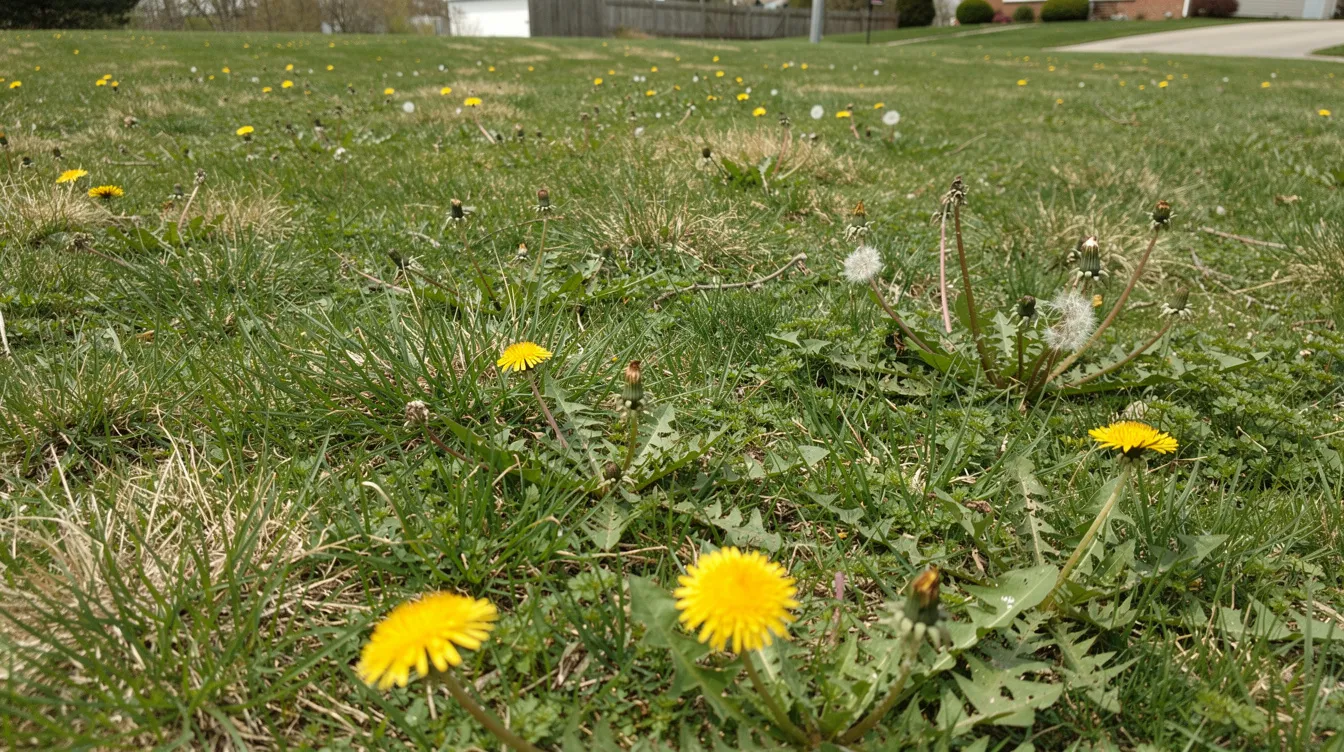
Know Your Lawn Weeds: Broadleaf vs. Grassy vs. "Look-Alike" Sedges
Correct identification is step one. The treatment for a broadleaf weed like dandelion is completely different from what works on a grassy weed like crabgrass or annual bluegrass, and using the wrong product wastes time and money.
Broadleaf weeds have wider leaves with prominent veins, often showy flowers, and distinct taproots or creeping roots. Common examples in CNY include dandelions, white clover, black medic, ground ivy (creeping charlie), chickweed, broadleaf plantain, Canada thistle, common ragweed, lambsquarters, and woodsorrel. Many produce bright yellow flowers, purple flowers, or star shaped flowers that make them easy to spot against uniform turf.
Grassy weeds have long, narrow blades that resemble grass and parallel veins. They blend into the lawn, standing out only by color or texture. Key species include crabgrass, goosegrass, quackgrass, and annual bluegrass (Poa annua). Grassy weeds resemble grass with long, narrow blades, which is exactly what makes them so frustrating.
Sedges and grass-like weeds such as nutsedge and kyllinga have triangular stems and shiny leaves. Nutsedge can grow faster than regular grass and is hard to control with standard herbicides because it requires different chemistry entirely. Nutsedge can be particularly aggressive in well-irrigated areas, making it a recurring headache for properties with irrigation systems. Common lawn weeds include broadleaf, grassy, and sedge types, and weeds are categorized into broadleaf and grassy types as a starting framework, but sedges are a third category that demands its own approach.
Weed Life Cycles: Annual, Biennial, and Perennial (And Why Timing Matters)
Understanding a weed's life cycle is critical for choosing when and how to treat it. The distinction between pre-emergent and post-emergent timing hinges on whether a weed has germinated yet.
Annual weeds complete their life cycle in one year. They germinate from seed, grow, produce seeds, and die within a single season. Summer annual weed species like crabgrass and prostrate spurge germinate in spring as soil warms. Winter annual weed species like chickweed and annual bluegrass seeds germinate in late summer or fall, overwinter, then set seed in spring. In Central New York, spring and fall germination windows are the two critical periods to intercept annual weeds.
Biennial weeds grow for two years before seeding. They form a vegetative rosette in year one, then flower and set seed in year two before dying. Musk thistle and yellow sweet clover are examples. Control is easiest during the rosette stage before the plant bolts.
Perennial weeds live for three years or more and regrow from roots, rhizomes, or stolons in addition to producing seed. Dandelions, clover, creeping charlie, Canada thistle, quackgrass, wild violets, and broadleaf plantain all fall into this category. These are the hardest to get rid of because even a small root fragment can regenerate. Pre emergent herbicides work for annuals before germination, systemic post emergent herbicides applied in late summer or fall are best for perennials, and consistent mowing and cultural practices help year-round.
Broadleaf Weeds: The Most Common Culprits in CNY Lawns
Broadleaf weeds are usually the most visible weeds in any lawn because their wide leaves and flowers stand out sharply against fine-textured turf.
Here are the most common broadleaf weeds we encounter in Central New York:
| Weed | Key Feature | Life Cycle |
|---|---|---|
| Dandelion | Bright yellow flowers, deep taproot | Perennial |
| White Clover | Round white flower clusters, trifoliate leaves | Perennial |
| Black Medic | Small yellow flowers, clover-like leaves | Annual/short-lived perennial |
| Ground Ivy (Creeping Charlie) | Scalloped leaves, square stems | Perennial |
| Broadleaf Plantain | Broad leaves, tall seed pods | Perennial |
| Canada Thistle | Sharp spines, purple flower heads | Perennial |
| Common Ragweed | Deeply lobed leaves | Annual |
| Lambsquarters | Diamond-shaped blue green leaves | Annual |
| Woodsorrel (Oxalis) | Heart shaped leaves, yellow flowers | Perennial |
| Prostrate Spurge | Low-growing, milky sap | Annual |
| Purslane | Fleshy stems, small yellow flowers | Annual |
Dandelions are perennial broadleaf weeds with deep taproots, and dandelions have a deep taproot that makes them hard to remove by hand. A single dandelion can produce hundreds of seeds per plant, each carried by wind across your property and beyond.
What makes broadleaf weeds successful is their combination of deep taproots, fast seed production, and ability to exploit bare soil and compacted soils. A selective broadleaf herbicide that spares grass, combined with improved mowing height, fertilization, and overseeding, is the standard control approach.
CGM Property Services commonly combines spot-spraying broadleaf weeds with routine mowing, edging, and seasonal clean-ups for residential and commercial clients across CNY.

Grassy Weeds in Grass: When the "Weed" Looks Just Like Your Lawn
Grassy weeds are often more frustrating than broadleaf weeds because they hide in plain sight. You may not notice them until they've spread significantly or their color and texture give them away.
Key grassy weeds in Central New York lawns:
- Crabgrass (Digitaria spp.): Grows in flat, star-shaped clumps close to the ground. A summer annual that dies after frost but leaves behind a devastating seed bank. Crabgrass can produce up to 150,000 seeds per plant, which is why a single season without treatment can lead to years of problems. Crabgrass seeds persist in the soil waiting for the right conditions.
- Goosegrass: Similar to crabgrass but with a distinctive whitish center. Goosegrass prefers compacted, low-quality soil to thrive, making it a common sight along walkways and high-traffic areas.
- Quackgrass: A perennial with a coarse, light green texture and aggressive rhizome system that spreads underground.
- Annual bluegrass (Poa annua): Light lime-green patches with fuzzy seed heads in early spring, standing out against dark green leaves of desirable turf.
Many grassy weeds cannot be selectively removed from cool-season turf once mature plants are established. Control relies heavily on pre emergent herbicide applications, hand-digging clumps, and renovating severely infested areas.
CGM Property Services addresses grassy weed pressure through proper mowing height, core aeration, fall overseeding, and targeted pre-emergents, protecting desirable turf while reducing the invaders.
Ground Ivy & Creeping Charlie: Controlling This Spreading Lawn Weed
Creeping charlie (Glechoma hederacea), also called ground ivy, is one of the most persistent broadleaf weeds in shady Central New York lawns. It thrives under trees and on the north sides of buildings where other plants struggle.
Identification: Look for bright green, rounded or scalloped broad leaves on square stems. In spring, it produces small purple flowers along creeping stems that root at every node and form dense mats across the lawn. It's a broadleaf perennial that spreads aggressively via stolons.
Why it's hard to eradicate: Creeping charlie tolerates shade, low mowing heights, and moist soil better than most turfgrasses. Even small stem fragments left behind after pulling will reroot and regenerate. It easily invades shady lawns where turf is already thin.
Control steps:
- Raise mowing height to at least 3 inches to give grass a competitive advantage.
- Improve sun exposure through selective pruning of tree canopy.
- Overseed with shade-tolerant cool-season grasses.
- Apply a selective broadleaf herbicide labeled for ground ivy, ideally in fall or early spring when the plant is actively growing but before it sets seed.
CGM Property Services often combines multiple visits of targeted herbicide with overseeding and regular mowing to gradually push creeping charlie out and restore turf density for CNY clients.
Annual Bluegrass (Poa annua): Managing a Cool-Season Grassy Invader
Annual bluegrass is a problem in cool-season lawns because it appears as pale, light green patches with visible seed heads in early spring, spoiling the look of otherwise uniform turf.
Identification: Poa annua has a bright green to lime-green color, upright tufted growth, soft texture, and abundant whitish seed heads that appear even at low mowing heights. Annual bluegrass can produce hundreds to thousands of seeds, and it does so rapidly, sometimes just days after pollination.
Life cycle in Central New York: This winter annual weed's seeds germinate in late summer to early fall when soil cools below approximately 70°F. Young plants overwinter as small tufts, then explode with seed production in spring before dying back in summer heat.
Control strategy:
- Apply fall pre emergent herbicides timed before late-summer germination.
- Maintain a dense lawn through fall fertilization and overseeding.
- Avoid overwatering, which keeps the soil surface moist and favorable for Poa annua.
- Reduce shade and relieve compacted soils through aeration.
On commercial and HOA properties, CGM Property Services schedules fall and early spring weed control visits specifically targeting annual bluegrass and other cool-season grassy weeds, combined with aeration to relieve compaction that encourages this invader.
Canada Thistle & Other Thorny Invaders in Turf and Beds
Canada thistle is a noxious, deep-rooted perennial that appears along lawn edges, around parking lots, and in neglected corners of CNY properties. It is both painful to touch (sharp spines line its leaves) and extremely difficult to eliminate.
Identification: Look for spiny gray-green leaves, purple flower heads in early summer, and cottony seed heads that blow into surrounding grass and garden beds. Its dark green leaves have a slightly glossy appearance.
Root system: Canada thistle has an extensive creeping root system with rhizomes that can spread horizontally 6 to 15 feet from the main plant, with vertical roots reaching several feet deep. Root fragments as small as 3 to 6 millimeters can produce new shoots, making simple chopping or pulling ineffective. The entire root system must be addressed.
Control best practices:
- Cut or mow before seed set to reduce spread.
- Apply systemic broadleaf herbicide in late summer or fall so the chemical translocates down to the roots.
- Repeat treatments over multiple seasons; research shows that cutting shoots before they reach 12 inches, repeated every 21 days, can deplete root reserves over approximately two years.
CGM Property Services treats Canada thistle as part of broader weed management around commercial entries, parking islands, and fence lines, often combined with mulch refresh and edging to minimize re-invasion.
Other Common Lawn & Garden Weeds Seen in Central New York
Many garden weeds spread into grass quickly if beds and edges are not maintained. Here are additional common weeds we regularly encounter:
- Lambsquarters: Annual with diamond-shaped leaves dusted in a powdery coating. Thrives in disturbed soils and garden edges.
- Black Medic: Low-growing with clover-like leaves and small yellow flowers. Signals low nitrogen.
- Purslane: Succulent annual with fleshy stems; tolerates heat and drought on bare soil.
- Prostrate Spurge: Flat-growing summer annual with milky sap; fills cracks and thin turf edges.
- Curly Dock: Broadleaf perennial with large, wavy leaves and tall brown seed pods.
- Common Mallow: Rounded leaves, small pink or white flowers; deep taproot.
- Garlic Mustard: Biennial invader in shady lawns and woodland edges.
- Common Chickweed: Thriving in cool, moist conditions, this low grower fills in during late spring and fall.
- Smartweed/Horsetail: Found in wet spots and poorly drained areas; horsetail is a primitive spore-producing plant, not a true grass or broadleaf.
- Woodsorrel (Oxalis): Heart shaped leaves often mistaken for clover; small yellow flowers.
While some of these, like purslane and lambsquarters, are edible or beneficial for pollinators and qualify as native plants in some contexts, they are still considered lawn weeds when they compete with turfgrass for space and resources.
A professional lawn maintenance program from CGM Property Services that includes regular mowing, bed edging, and seasonal clean-ups greatly reduces these opportunistic weeds along walkways, patios, and planting beds.
How Weeds Get Into Grass: Soil, Mowing, and Other Root Causes
Most weed problems are symptoms of underlying turf stress rather than simply bad luck with wind-blown seeds. Certain weeds indicate underlying lawn issues such as poor drainage or soil compaction. Weeds thrive in weak or patchy lawns, and understanding the root causes tells you where to focus your efforts.
Compacted soil is one of the biggest culprits. High-traffic areas around play areas, commercial entrances, and walkways compress soil particles, reducing water infiltration and root depth. Soil compaction can lead to weed proliferation in lawns, favoring prostrate knotweed, plantain, goosegrass, and annual bluegrass over deep-rooted turfgrass. Goosegrass thrives in compacted, low-quality soil, so its presence is essentially a soil-health warning sign.
Mowing too short ("scalping") and irregular mowing schedules thin turf and allow sunlight to reach bare soil, which is exactly what weed seeds need to germinate. Cool-season grasses in CNY perform best at mowing heights around 3 to 3.5 inches. Mowing grass at a height of 3 to 4 inches can help prevent weed germination by keeping the soil shaded.
Fertility and pH issues also invite trouble. Low nitrogen encourages clover and black medic. Overly wet, rich soils favor nutsedge, smartweed, and dollarweed in low areas.
Moisture extremes create additional openings. Overly wet or poorly drained moist soil encourages moss, algae, nutsedge, horsetail, and smartweed. Dry, compacted slopes push crabgrass and purslane into thin turf.
How to Get Rid of Weeds in Grass: A Step-by-Step Strategy
Instead of grabbing a random bottle from the hardware store, follow a structured sequence that addresses both existing weeds and their underlying causes. Thoroughly identifying weeds before treatment ensures the effectiveness of control strategies.
Step 1 - Assess and identify. Walk the lawn and note the main weed species. Are you dealing with broadleaf weeds, grassy weeds, or sedges? How dense is the infestation, and is the lawn mostly grass or mostly weeds?
Step 2 - Decide on renovation vs. spot treatment. When weeds exceed roughly 50 to 60 percent cover, it is often more efficient to kill the existing turf and weeds, correct the soil, and reseed rather than chasing individual plants. For lighter infestations, spot treat and rebuild.
Step 3 - Targeted herbicides. Use a selective broadleaf herbicide for dandelions, clover, plantain, and creeping charlie. For grassy weeds, rely on pre emergent applications for crabgrass and annual bluegrass. Nutsedge requires a product specifically labeled for sedge control. Post emergent weed control targets existing weeds that are already actively growing. For younger weeds and established plants alike, match the product to the species.
Step 4 - Manual and mechanical control. Hand pull isolated weeds after rain when the soil is soft, especially before they produce seeds. Dig out deep taproots completely. Use string trimmers along fence lines and edging tools to cut back encroaching garden weeds from flower beds and bed borders.
Step 5 - Rebuild the lawn. Overseed thin patches with a quality cool-season mix, apply proper fertilization, adjust irrigation, and raise mowing heights. A dense, healthy lawn acts as a barrier to weed growth, making it much harder for the next wave of weed seeds to establish.
CGM Property Services handles this full process for CNY homeowners and commercial clients, from initial weed assessment through ongoing maintenance visits.

Pre-Emergent vs Post-Emergent Weed Control in Lawns
Pre emergent and post emergent herbicides serve fundamentally different purposes, and both play a role in managing weeds in grass effectively.
Pre-emergent herbicides create a chemical barrier in the top layer of soil that prevents weed seeds from germinating. They work on summer annuals like crabgrass and many annual broadleaf weeds. Pre-emergent herbicides prevent annual weed seeds from germinating in spring, but they must be applied before germination begins. In Central New York, that means applying when soil temperature at a 2-inch depth reaches approximately 50 to 55°F and is trending upward, typically late April to early May. A second window in late summer targets fall germinators like annual bluegrass. Pre-emergent herbicides prevent weeds before they surface, and residual activity typically lasts 6 to 10 weeks.
Post-emergent herbicides are applied to actively growing, emerged weeds. Post-emergent herbicides target existing weeds. Selective formulas spare desirable grass while killing broadleaf weeds. A non selective weed killer like glyphosate kills everything it contacts and is reserved for spot use or renovation situations. An iron based herbicide can control young dandelions and henbit with less environmental impact. Effective post emergent herbicides work best on younger weeds before they reach maturity.
Always read the label to match the product to the weed type (broadleaf weeds vs grassy weeds vs sedges), your turf species, and your site. Weed killers used incorrectly can damage desirable turf.
CGM Property Services uses an integrated approach: pre-emergent barriers, post-emergent spot treatments, and cultural practices like mowing and overseeding work together rather than relying on chemicals alone.
Non-Chemical & Low-Impact Options to Reduce Lawn Weeds
Many CNY homeowners and HOAs want to minimize chemical use, especially around children, pets, and shared spaces. There are several effective alternatives.
Manual methods remain powerful for small-scale problems. Hand-pulling is effective for isolated weeds before they produce seeds. After a rain, when soil is soft, you can hand pull dandelions, plantain, and young plants of many broadleaf species. Hand-pulling is effective for small infestations of weeds when done consistently. Use a digging fork or dandelion tool to extract the entire root system of tap-rooted perennials. Cut back Canada thistle rosettes before seed heads form by trimming them regularly to exhaust root reserves.
Cultural practices naturally suppress weeds over time:
- Mow your lawn regularly at the correct height (3 to 3.5 inches).
- Water deeply and infrequently to encourage strong grass root systems instead of shallow roots favored by shallow-rooted weeds.
- Aerate compacted areas annually.
- Overseed each fall to fill bare soil with desirable grass.
Mulch in beds and tree rings prevents garden weeds from establishing and creeping into adjacent turf, reducing the seed bank near your lawn's edges. Grass clippings left on the lawn after mowing also return nutrients and help shade the soil surface.
CGM Property Services can design a low-input or reduced-herbicide maintenance plan for clients prioritizing environmental considerations, focusing on mowing, edging, aeration, and mechanical removal.
Seasonal Weed Control Calendar for Central New York Lawns
Here is a season-by-season outline of what to do and which weeds to watch for in the Syracuse and broader Central NY region.
Spring (March–May)
- Apply pre emergent for crabgrass and summer weeds when soil temps hit 50 to 55°F.
- Spot treat dandelions and plantain as they emerge in early spring.
- Begin mowing at correct height once grass starts growing in late spring.
- Clean up winter debris that harbors garden weeds and seed pods from last season.
Summer (June–August)
- Monitor for summer weeds: crabgrass, goosegrass, nutsedge, and prostrate spurge.
- Watch for ground ivy spread in shaded areas during early summer.
- Keep mowing heights higher to shade bare soil and suppress weed germination.
- Address irrigation issues creating wet spots that favor dollarweed and smartweed.
Fall (September–November)
- This is the best time for broadleaf weed control on perennials like creeping charlie, clover, and Canada thistle.
- Overseed and fertilize cool-season turf aggressively.
- Consider fall pre-emergents against annual bluegrass and winter annuals like chickweed.
- Perform fall clean-ups to remove leaf litter that smothers grass and harbors weed seeds.
Winter (December–February)
- Limited active weed work, but plan and schedule spring treatments.
- Review maintenance agreements and schedule seasonal visits with CGM Property Services, especially for HOAs and commercial properties with annual contracts.
Lawn Care Practices That Crowd Out Weeds Long-Term
The most effective weed control product is a dense, vigorously growing lawn. Where grass completely covers the soil, weed seeds struggle to establish, and other plants cannot compete. Correct lawn care practices should prioritize promoting healthy grass over chemical treatments for weed management. Maintaining a healthy lawn reduces the chances of weed infestations significantly over time.
Mowing: Keep cool-season grass blades at 3 to 3.5 inches. Cut no more than one-third of the blade height at once. Proper mowing height is important for preventing weed growth, and a sharp mower blade makes a clean cut that heals quickly, unlike a dull blade that shreds grass and invites disease.
Fertilization: Spring and fall feedings support dense turf. Low nitrogen invites clover and black medic, while balanced fertility keeps grass competitive. Soil tests every two to three years help you tweak pH and nutrient levels.
Irrigation: Watering deeply and infrequently encourages strong grass root systems. Shallow, frequent watering keeps the surface moist and favors shallow roots on weeds like crabgrass and chickweed. Most established CNY lawns need supplemental watering only during extended dry spells.
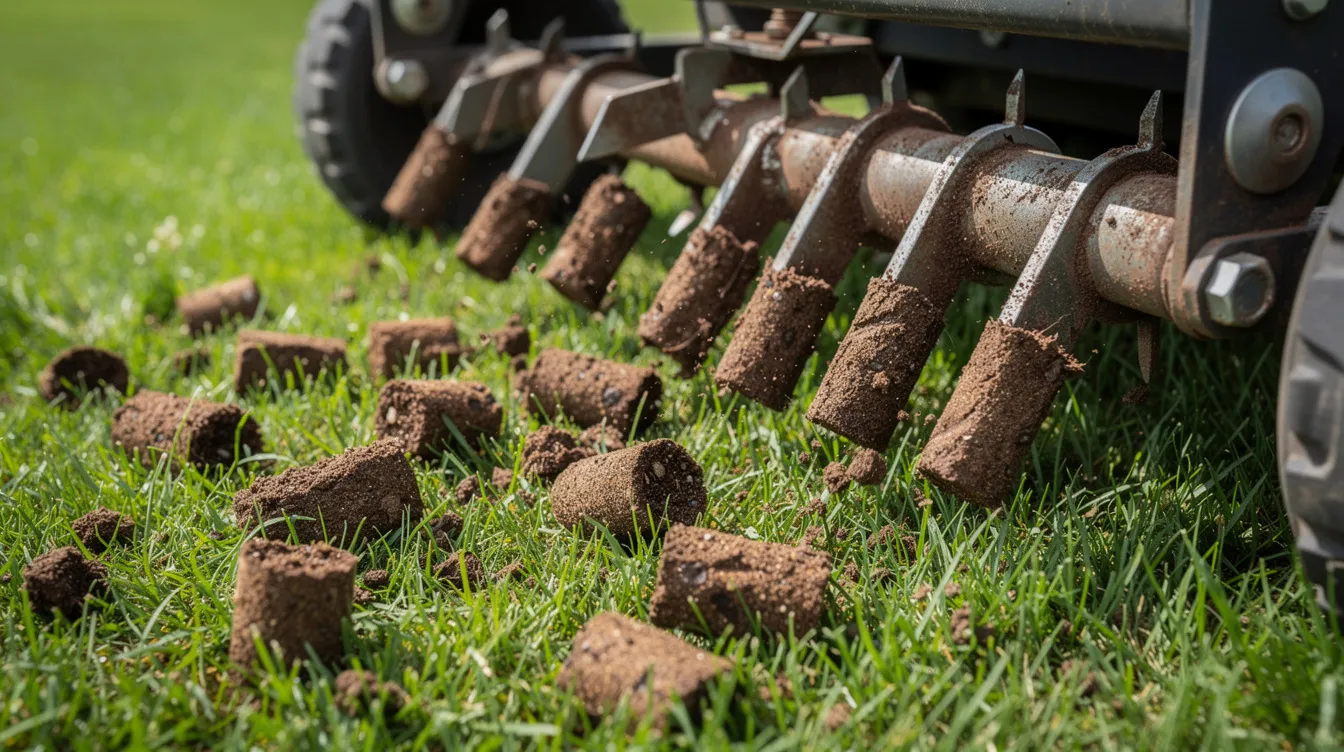
Aeration and overseeding: Aerating compacted soil can improve lawn health and competitiveness against weeds. CGM Property Services provides core aeration and overseeding each fall for many CNY clients to reduce compaction and fill in thin, weed-prone areas. This combination is one of the most impactful things you can do for long-term weed suppression.
Commercial, HOA & Apartment Community Weed Management
Non-residential properties face unique challenges: high foot traffic compacts turf around sidewalks and parking lots, and the need for a consistently neat appearance is non-negotiable for tenants and visitors.
Common lawn weeds like crabgrass, broadleaf plantain, prostrate knotweed, and Canada thistle concentrate along curbs, entrances, dumpster areas, and playgrounds. These high-visibility zones need more frequent attention than residential lawns.
CGM Property Services structures commercial weed management programs to include:
- Regular lawn mowing and edging
- Turf fertilization on a seasonal schedule
- Pre- and post-emergent weed applications timed to CNY conditions
- Spring and fall clean-ups bundled into predictable seasonal contracts
For apartment communities and HOAs, CGM coordinates with boards and property managers to schedule services at low-disruption times and tailor weed control around play areas, pet zones, and high-visibility entrances.
Transparent pricing and clear communication, including advance notices for weed control visits, are essential for building long-term relationships with commercial clients. CGM provides detailed proposals so there are no surprises.
How CGM Property Services Tackles Weeds in Grass Across Central New York
CGM Property Services is a local CNY specialist that integrates weed control with complete landscape maintenance. We do not offer one-off spray jobs; we build season-long programs that deliver lasting results.
Services relevant to weed management include:
- Residential and commercial lawn mowing
- Edging and trimming
- Landscape maintenance
- Spring and fall clean-ups
- Pruning and trimming of trees and shrubs
- Customized maintenance programs with weed control built in
Our process on a new weed-ridden property:
- On-site inspection to identify major broadleaf weeds, grassy weeds, and garden weeds.
- Soil and turf health assessment to determine root causes (compaction, shade, fertility, drainage).
- Season-long plan combining cultural practices with targeted herbicide applications.
- Regular follow-up visits, with progress tracked and adjustments made as conditions change.
We emphasize reliable scheduling, transparent pricing, and realistic timelines. If your lawn has entrenched perennials like creeping charlie, Canada thistle, or quackgrass, we will be honest: it takes multiple seasons of consistent work, not one magic application.
CGM serves homeowners, HOAs, apartment communities, and commercial properties throughout Central New York, offering free estimates and options for ongoing maintenance agreements.

Frequently Asked Questions About Weeds in Grass (FAQ)
Below are answers to the most common questions CNY property owners ask us about dealing with weeds in grass. Each answer is tailored to Central New York conditions and the services CGM Property Services provides.
Can I ever have a completely weed-free lawn in Central New York?
A truly weed free lawn year-round is unrealistic. New weed seeds constantly arrive via wind, birds, foot traffic, and mowing equipment. The soil seed bank in any established lawn contains thousands of dormant seeds waiting for the right conditions.
However, visible weed cover can be reduced to the point where it is barely noticeable. Combining regular mowing, correct fertilization, timely pre- and post-emergent treatments, and annual overseeding typically keeps weeds under 5 to 10 percent cover on well-maintained properties. That level of control gives you a lawn that looks uniformly green and healthy even if a few individual weeds persist.
CGM Property Services designs maintenance programs around this "practical perfection" goal rather than promising impossible total eradication.
How long does it take to get rid of an established creeping charlie or Canada thistle problem?
Deep-rooted or stolon-forming perennial weeds almost never respond to a single treatment. One spray may knock back the visible growth, but underground stems, roots, and fragments regenerate quickly.
A realistic timeframe is 1 to 3 years of repeated fall and spring applications combined with overseeding and improved mowing and soil practices to significantly reduce established patches. For Canada thistle specifically, research from Cornell shows that repeated cutting of shoots every 21 days, combined with systemic herbicide, can deplete root reserves over approximately two years.
CGM typically maps infestations and tracks progress across visits for HOA and commercial sites, providing documentation that shows year-over-year improvement so clients can see the return on their investment.
Are there lawn weeds I should absolutely avoid touching with bare hands?
Yes. Several plants found in Central New York lawns and landscape edges can cause skin irritation or injury:
- Poison ivy: Extremely common in NY. All parts of the plant contain urushiol oil, which causes severe contact dermatitis. Never burn poison ivy, as inhaling the smoke can cause dangerous respiratory reactions.
- Canada thistle and other thistles: Sharp spines can puncture skin and cause infections.
- Stinging nettle: Fine hairs inject irritants on contact.
- Prostrate spurge and other spurges: Milky sap can irritate skin and eyes.
Always wear gloves, long sleeves, and eye protection when handling unknown spiny or milky-sapped weeds. CGM crews are trained to identify and safely remove or treat these hazardous weeds so property owners don't need to risk direct contact.
Will overseeding alone get rid of weeds in my grass?
Overseeding improves turf density and is a powerful long-term weed deterrent, but it does not instantly kill existing broadleaf weeds or mature plants of grassy weed species. Established plants that already have root systems in place will outcompete newly germinated grass seed.
Best results come from a combination approach: thin or kill heavy weed patches first, then overseed with appropriate cool-season grass mixes, and follow up with weed control as seedlings establish. Timing is key: overseeding in CNY works best in early fall (September) when soil is warm, moisture is adequate, and weed competition is declining.
CGM often schedules core aeration and overseeding in early fall, paired with weed control visits, as a standard package for CNY clients wanting major lawn improvement.
How do I get started with CGM Property Services for weed control?
Getting started is straightforward:
- Contact CGM Property Services via phone or through the website to request a free on-site estimate.
- Schedule a visit where a technician assesses your lawn weeds, grass condition, and overall landscape maintenance needs.
- Receive a clear written proposal with transparent pricing for services such as mowing, edging, fertilization, weed control applications, and seasonal clean-ups.
Property owners in Central New York can choose between one-time corrective work and ongoing maintenance programs designed to keep weeds in grass under control all season long. Whether you are a homeowner with a stubborn crabgrass problem, an HOA board looking for consistent turf management, or a commercial property manager needing reliable grounds maintenance, CGM Property Services has the local expertise and the seasonal programs to deliver results. Contact us today for your free estimate.